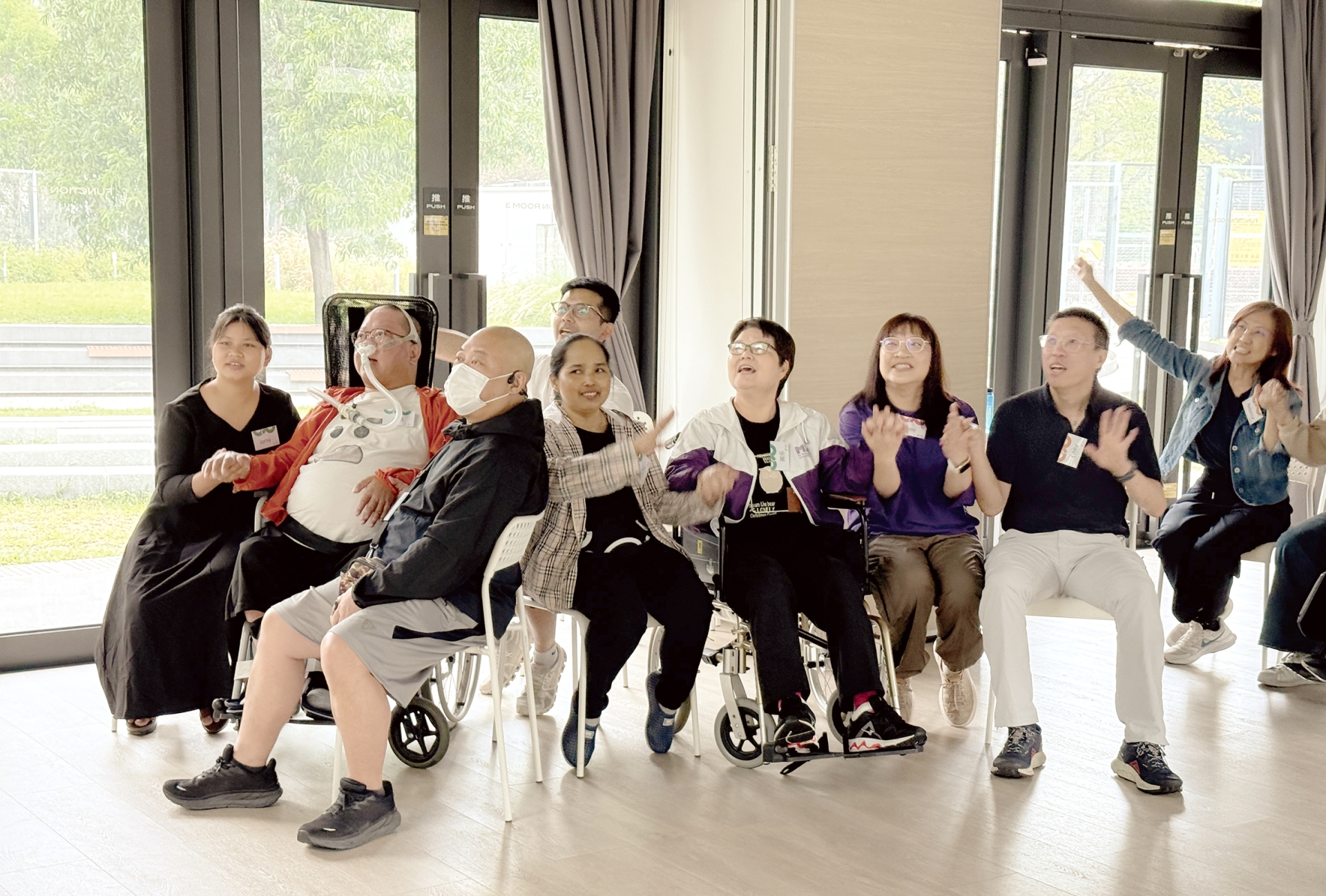
Bringing warmth and meaningful lives to MND patients through medical-social rehabilitation integration
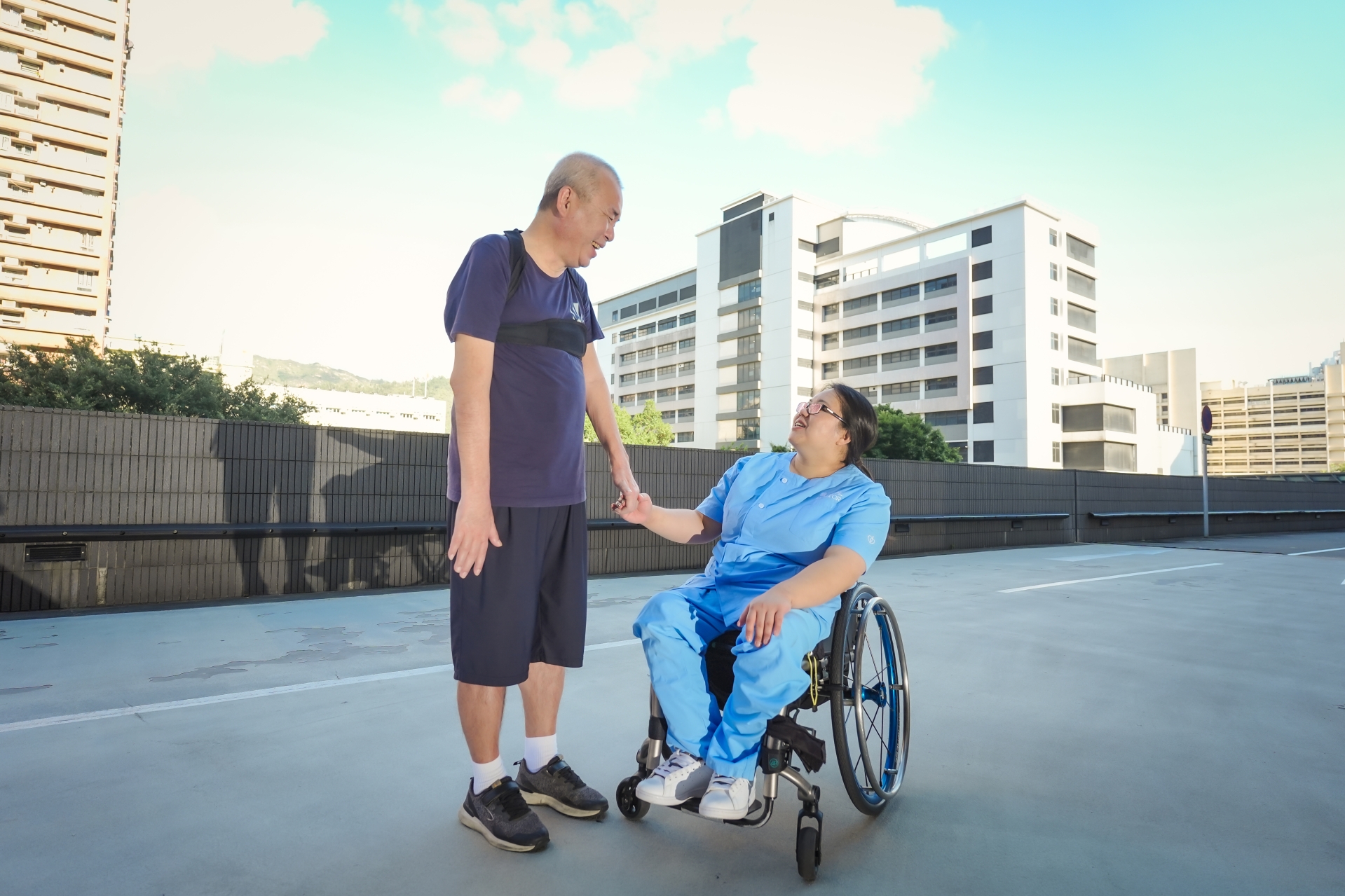
"When I knew the diagnosis, I lost direction in my life." Wing-on, once the pillar of his family, was diagnosed with motor neuron disease (MND). Within a short time, he experienced rapid physical decline and could no longer go for work. "After joining the WARM Service, I receive support from the integrative rehabilitation team and social worker physically, mentally, socially and spiritually. They helped settle my burning issues, such as hiring a domestic helper to allow my family to go to work," he shares.
Proactive anticipatory planning with medical-social resources optimised
Since 2011, Tuen Mun Hospital (TMH) has established a multispecialty team and introduced a rehabilitation pilot programme to address the challenges facing by MND patients – difficulty in diagnosis with rapid deterioration, and evolving needs of multidisciplinary rehabilitation intervention. To further enhance patients' quality of life, TMH Rehabilitation Centre has partnered with the Hong Kong Society for Rehabilitation (HKSR) to launch the WARM Service, synergising rehabilitation treatment with community support through an innovative approach of medical-social integration. Currently, the WARM Service covers all 42 MND patients within the New Territories West Cluster.
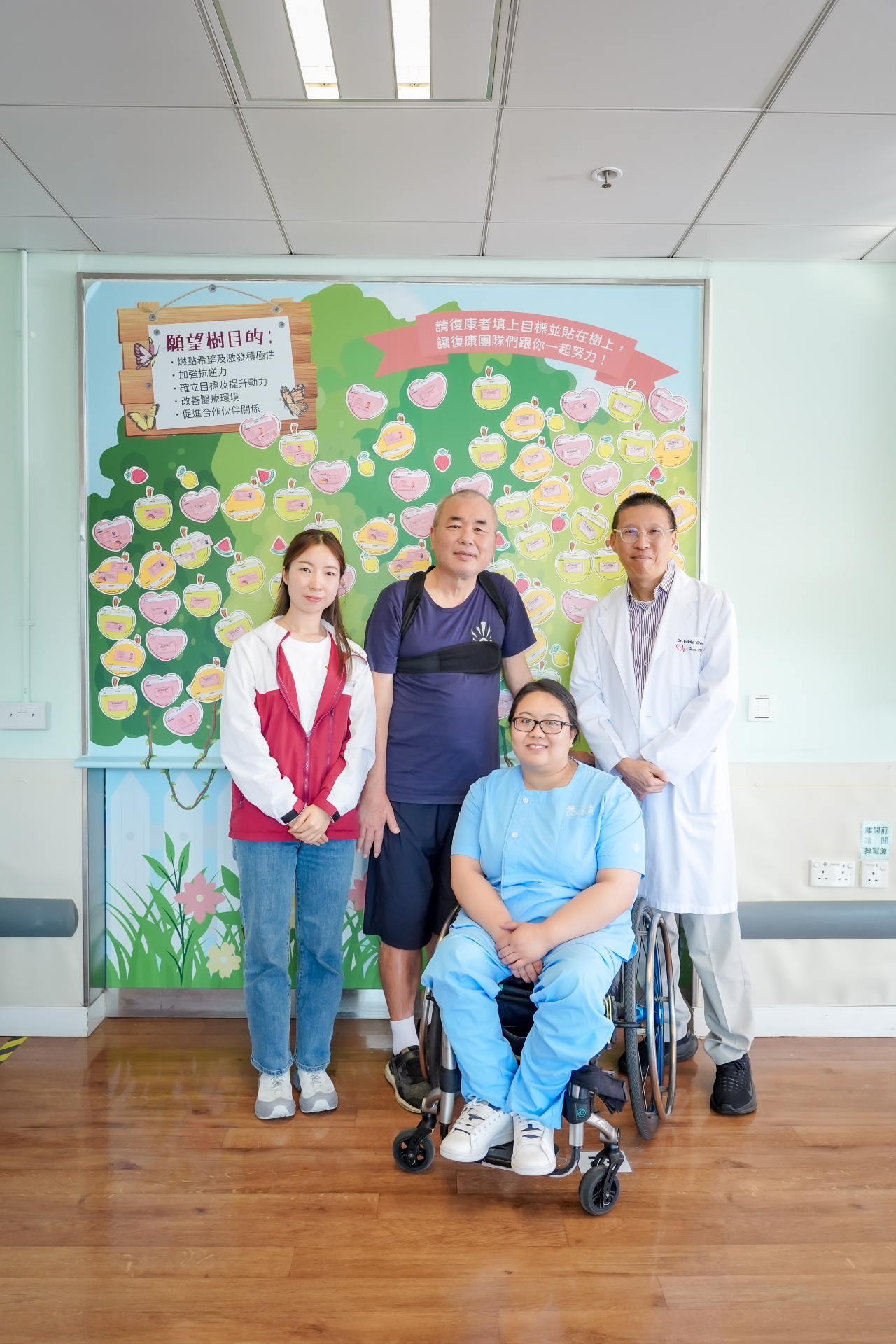
Dr Jennifer Lui, Resident Specialist (Rehabilitation) of the Department of Medicine and Geriatrics at TMH, remarks, "through multidisciplinary cooperation, patients are referred to the Day Rehabilitation Centre for a comprehensive assessment earlier during the incipient stage of the disease, anticipating the impact on their daily life. Social workers from HKSR also participate simultaneously in admission, home visits, and treatment planning, assisting patients to access community resources immediately." Data from the palliative care team has shown that patients receiving multispecialty services have a median survival time of 20 months, which is much longer compared to nine months for non-participants.
Dr Eddie Chow, Consultant (Rehabilitation) of the Department of Medicine and Geriatrics at TMH, shares, "previously, we had limitation accessing the community resources which could meet specific needs of MND patients. Meanwhile, HKSR found it difficult to apply suitable resources due to limited medical and rehabilitation understanding of MND patients' needs. Through this programme, we have broken down the barriers between hospitals and social services, and can promptly arrange appropriate assistive devices and community support according to the patients' condition." HKSR social worker Shirley Xiao expresses that the attentive care provided by the medical team boosts patients' motivation for rehabilitation, thereby facilitating the organisation's provision of community services.