Empowering carers and walking together on the journey to rehabilitation
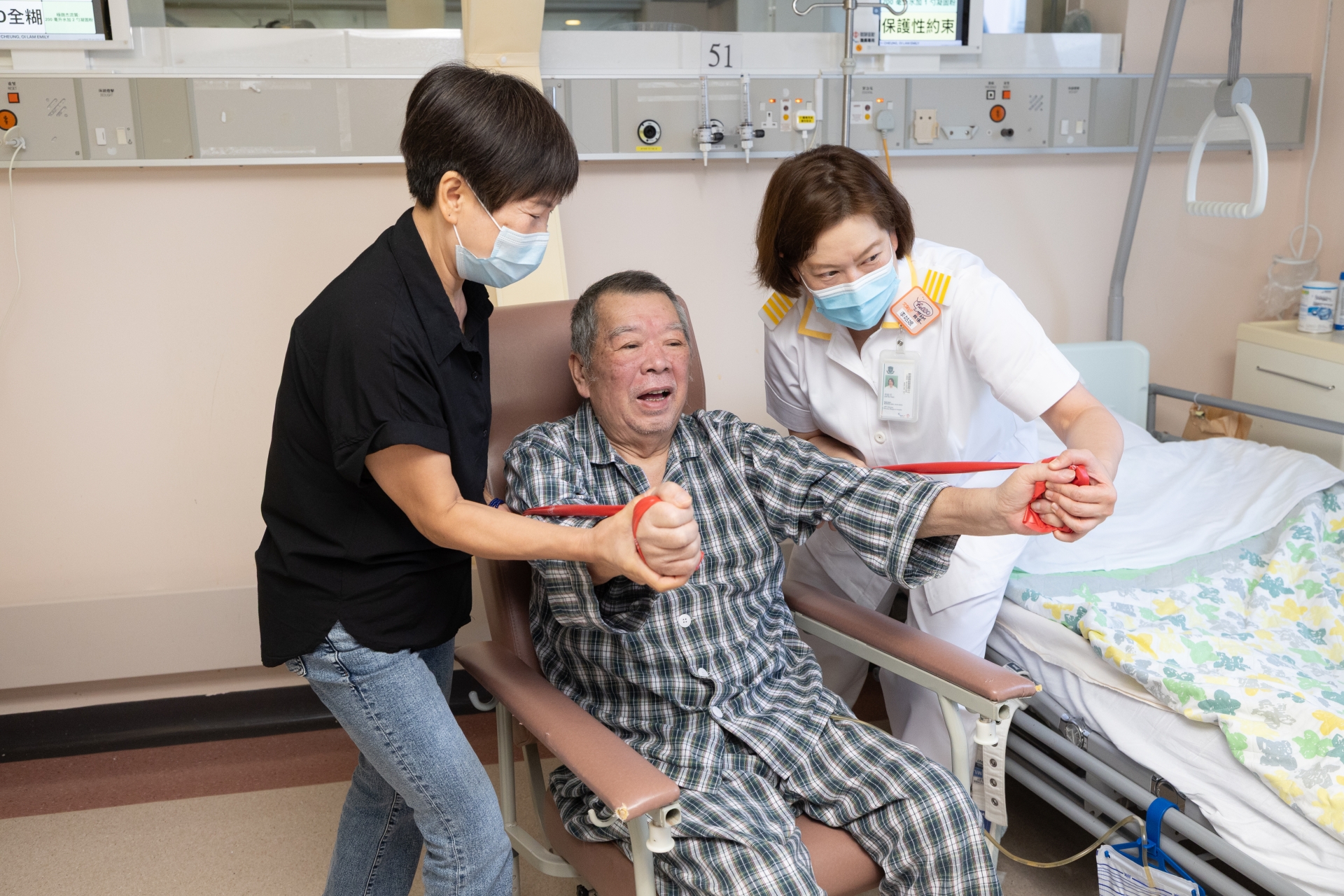
Although healthcare staff provide scheduled rehabilitation training for patient in need, time is inevitably limited. If family members receive training and assist patients with rehabilitation exercise during visiting hours, it does not only increase patients' training frequency, but also increases carer's confidence in their training techniques. The effectiveness of care will be greatly enhanced, helping to accelerate recovery.
Tang Mei-mei, Advanced Practice Nurse (Lai King Building) of Princess Margaret Hospital (PMH), notes that the carer is the greatest motivation in a patient's rehabilitation journey. She expresses that a patient-centred 'Rehabilitation Reform Programme' has been actively promoted at Lai King Building of PMH in recent years. As part of this initiative, since August 2024, the healthcare team teaches carers how to assist patients with rehabilitation exercises, allowing family members to walk alongside patients on their road to recovery.
Fully supported by multidisciplinary team
Tsoi Yin-ni, Advanced Practice Occupational Therapist, outlines that the team coaches family members on bedside rehabilitation training for patients, with a focus on self-care activities, upper limb exercises and cognitive stimulation. In addition, the team delivers training in activities of daily living, such as wheelchair transfers and dressing techniques, while providing guidance on the appropriate use of assistive devices which include wheelchairs, nursing beds and commode shower chairs. Furthermore, the team supports the planning and implementation of home environment modifications. Lee Kai-fong, Advanced Practice Physiotherapist, states that the team assesses patients' conditions and sets rehabilitation goals with patients and carers, delivers tailored physiotherapy with different modalities, such as resistance band exercises to strengthen upper and lower limbs, instructed proper manual handling techniques, mobility and balance training, and home exercise programme to carers. The comprehensive support from this multidisciplinary team also includes speech therapists and dietitians, who provide guidance on feeding techniques, as well as chaplains who look after the patients' needs regarding physical, psychological, social, and spiritual well-being.
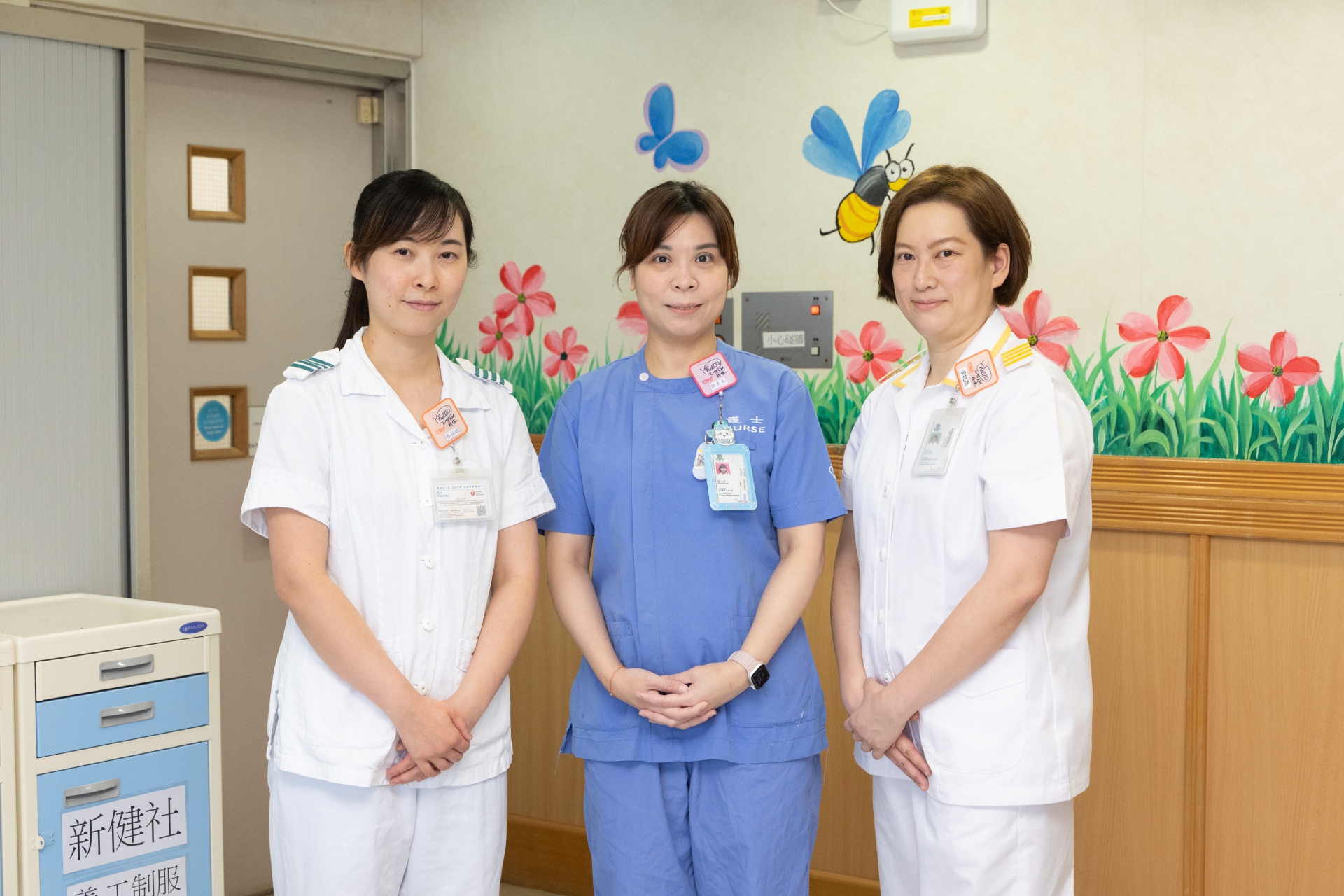
The team has witnessed numerous families transition from helplessness to reassurance. Lee shares a story of a middle-aged male patient. In the early rehabilitation phase, multiple healthcare staff were required to transfer him. His wife was deeply worried about his condition. The team thus invited her to join the carer training programme to empower her to support the rehabilitation exercises. As the patient's condition gradually improved and was able to walk with minimal assistance, his wife requested home leave for him during a long holiday. Upon his return, his wife expressed confidence in taking care of the patient and proactively requested an early discharge.
Early intervention enhances patients' motivation
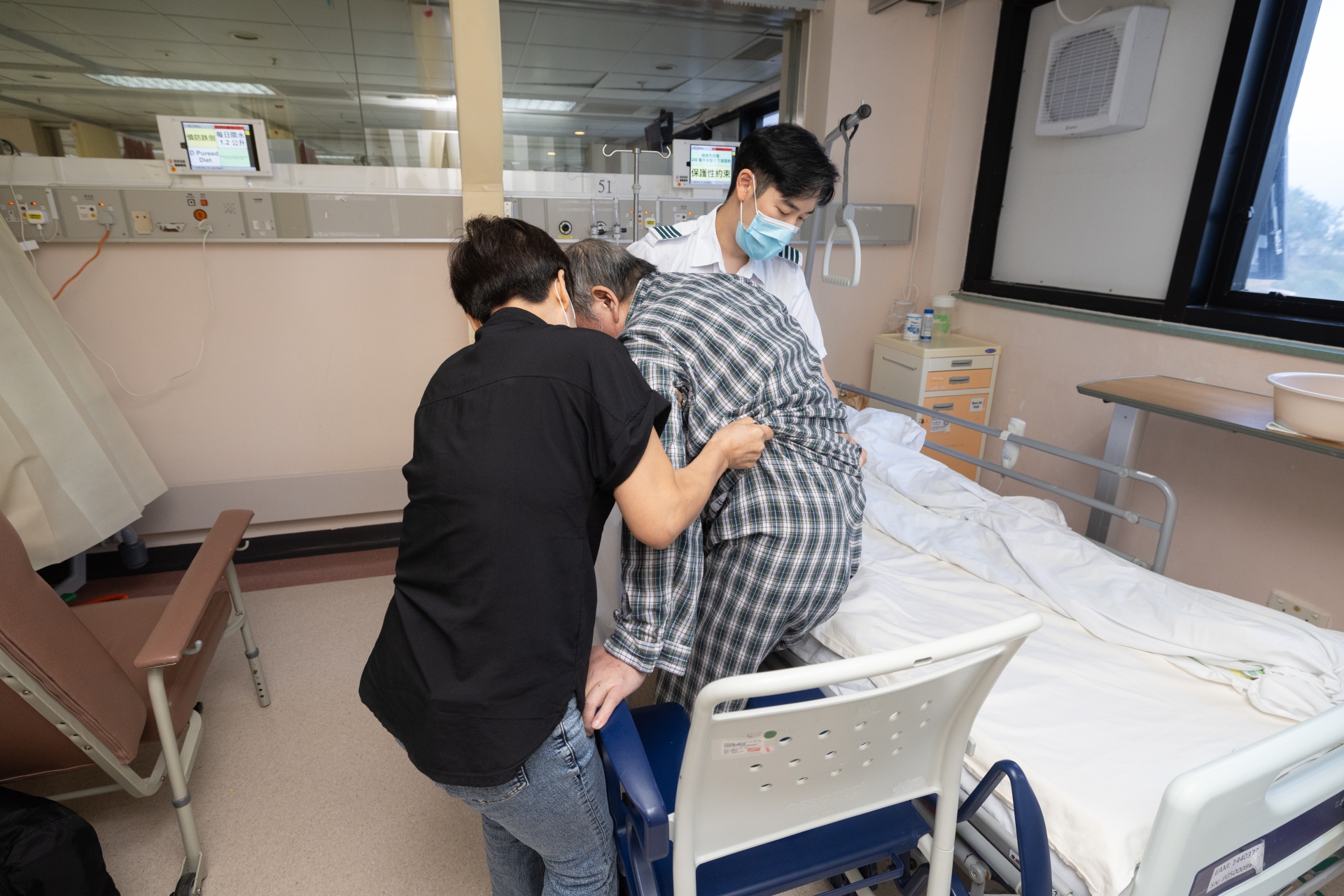
Unlike in the past, where family members only received care instructions when the patient was preparing for discharge, the training allows early involvement of the carers and keeps them updated on the patient's progress. "Rehabilitation training allows carers to see the patient's progress. At the same time, it gives patients greater confidence and motivation during the recovery process," says Tang. Through daily training in the wards, family members can realise the patient's maximum capabilities. Meanwhile, the healthcare team can collaborate, adjust, and formulate a realistic discharge and community transition plan with the family based on the patient's physique and living environment. Rehabilitation training is not merely a carer training programme; it is also a process of building mutual trust between healthcare staff and patients.
Last year, the team provided training to 130 carers, in the first quarter of this year alone, 55 carers have already received training. Behind these statistics are families who have found their direction on the road to recovery. With the extension of visiting hours and the upcoming completion of the Lai King Building expansion project, the team is actively preparing to extend this programme to more specialties, hoping to benefit even more families.