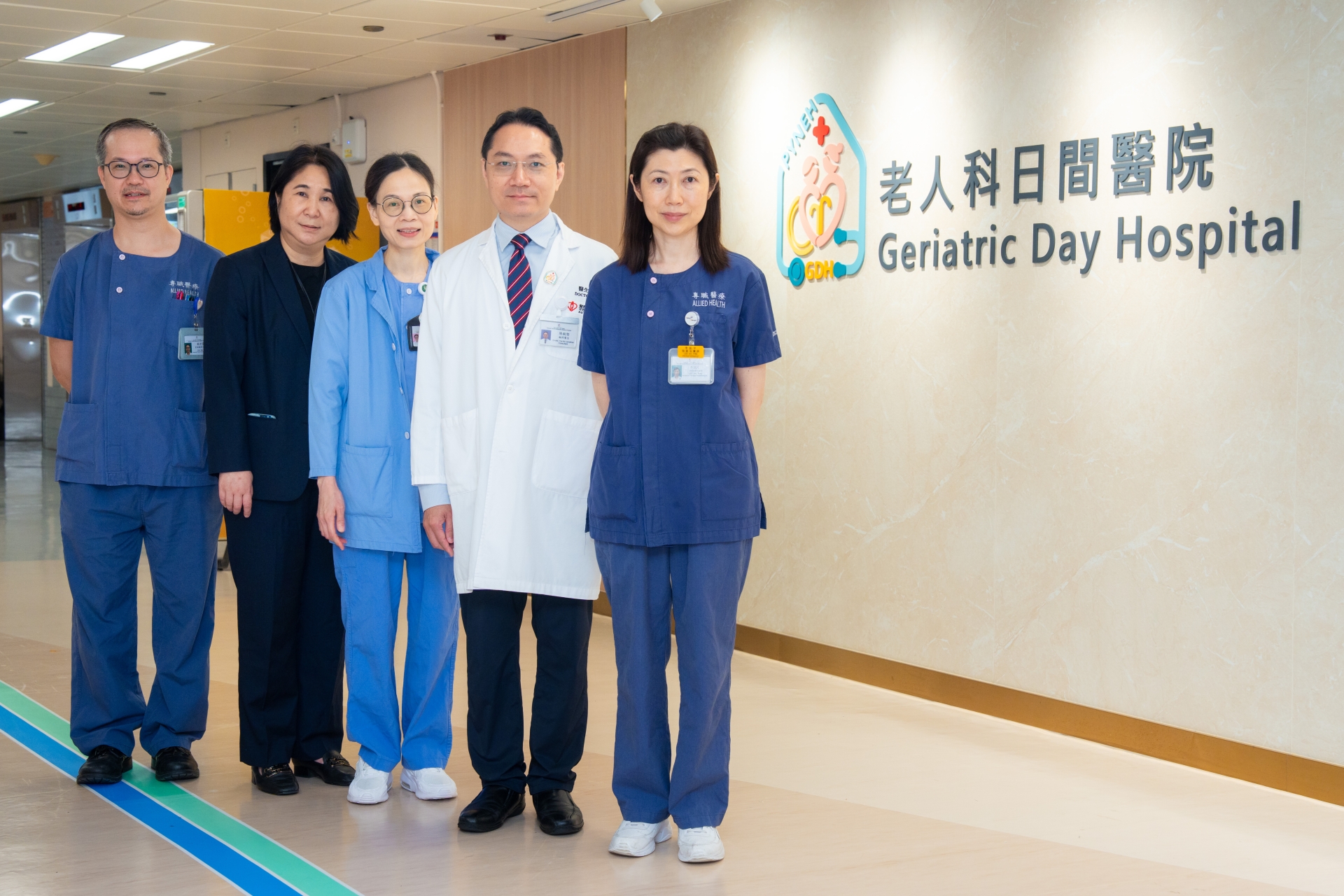
Innovating elderly rehabilitation through gerontechnology
In the bright and spacious physiotherapy and occupational therapy areas, some elderly patients are cycling 'through time', while others are 'catching fish in the deep sea' – this is the daily routine at the Geriatric Day Hospital (GDH) of Pamela Youde Nethersole Eastern Hospital (PYNEH) after its upgrade. By introducing gerontechnology, the hospital has moved away from the dull image of traditional training and enhanced the rehabilitation experience for older adults.
Dr Jonathan Chan, Deputy Chief of Service (Medicine) and Consultant Geriatrician at PYNEH, says, "the previous GDH had limited space and aged equipment, making it difficult to meet patients' needs. We kept exploring ways to increase older adults' interest in rehabilitation. After the upgrade, we expanded the rehabilitation areas and introduced virtual reality (VR) and cave automated virtual environment (AR-CAVE) systems to make training more interactive and enjoyable while serving more patients." The hospital is also actively incorporating smart care and telehealth, offering more modern rehabilitation services for older adults.
Patient Mr Li, who has experienced both training systems, expresses that he feels more energetic, "these trainings are as fun as playing games, which motivate me to exercise more. I used to rely on a wheelchair, but now I can walk slowly with a cane. My family also feels more at ease when I go out."
VR × Cycling: Back in the days
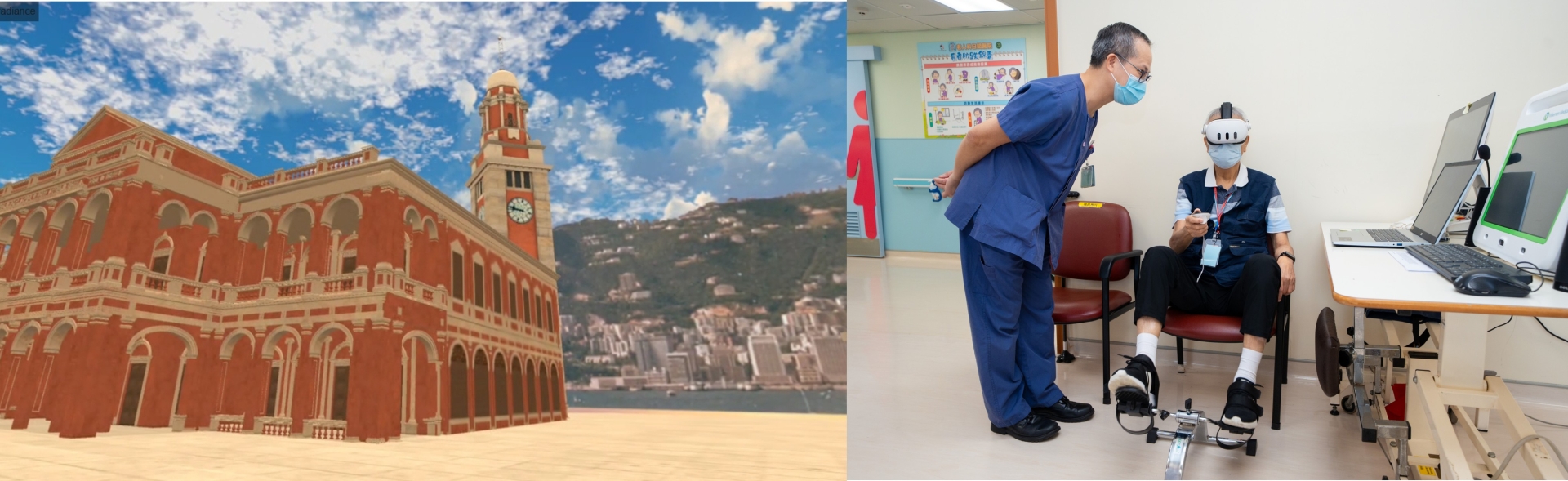
Elderly patients wearing VR headsets are immersed in old Tsim Sha Tsui while pedalling through a 'time-travel' journey to the present. Along the way, they visit landmarks, collect stars, and answer questions, providing holistic training in physical endurance, cognitive skills, attention and memory.
This innovative system was developed by the Occupational Therapy team. Advanced Practice Occupational Therapist Ricky Dai shares, "we aimed to blend reminiscence therapy with physical training. Tsim Sha Tsui retains several historic landmarks that easily evoke fond memories. During training, many patients share stories about changing streetscapes or their working lives in the past."
The team plans to further enhance the system by considering multiplayer modes for family interaction and expanding the scenarios to the Eastern District of Hong Kong Island to engage older residents and deepen the therapeutic impact.
AR-CAVE × Interactive games: Providing diverse training
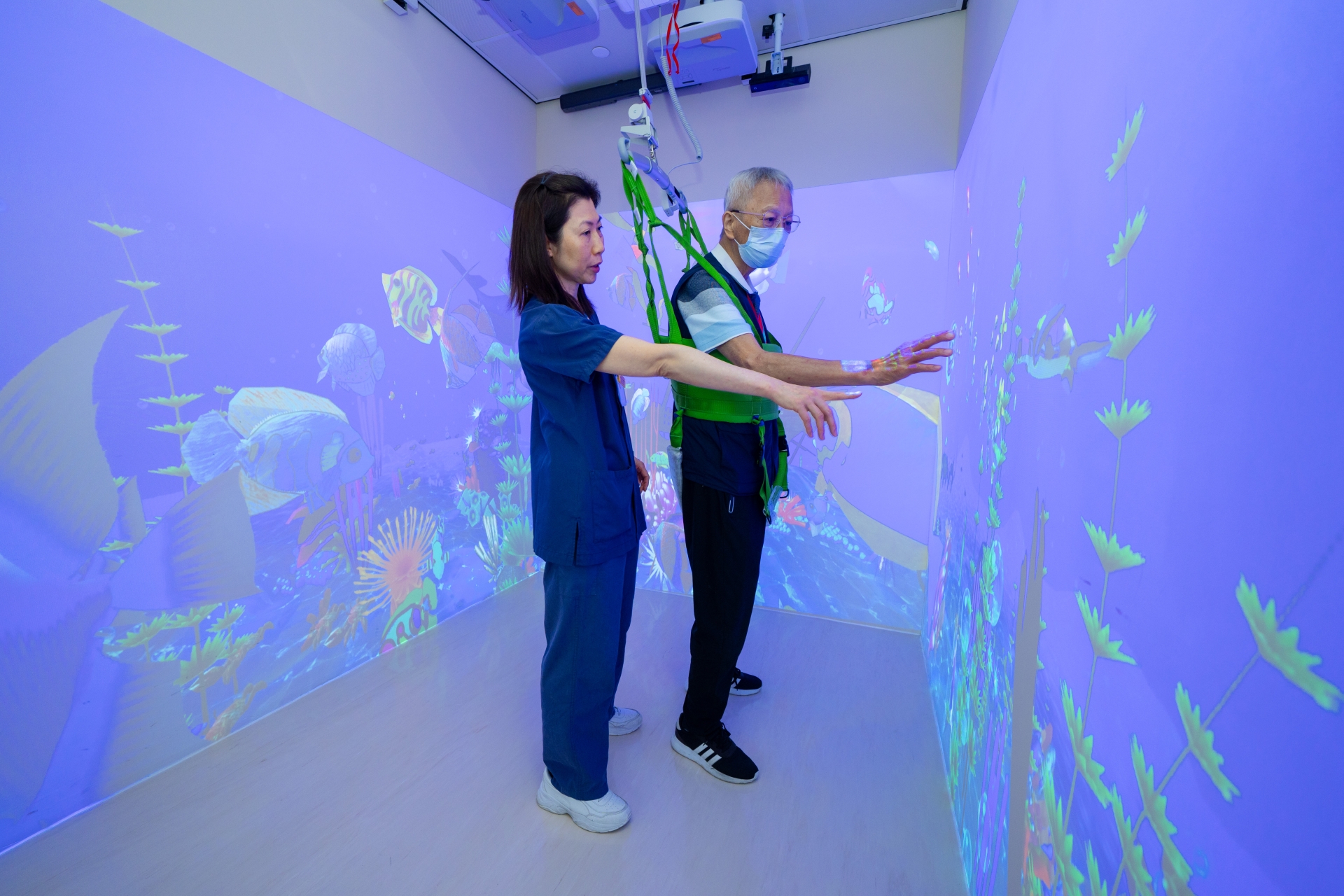
Equipped with motion tracking and 3D displays, the AR-CAVE system creates hyper-realistic virtual environments for elderly patients. It also offers a range of training modules that serve the dual purpose of physiotherapy and occupational therapy. Through fish-catching and balloonpopping games, physiotherapists can train patients' handeye coordination, reflexes, fall prevention, and dynamic balance, while the daily-life scenarios simulated in the system help occupational therapists support patients in practising independent living skills.
As the system is installed in a separate area, safety becomes the team's top priority. Advanced Practice Physiotherapist Grace Lee explains, "we have installed ceiling hoist that provides support for older adults, allowing them to focus on coordination training while minimising the risk of falls. This setup also enables therapists to guide training safely."