Next stop: Rehabilitation
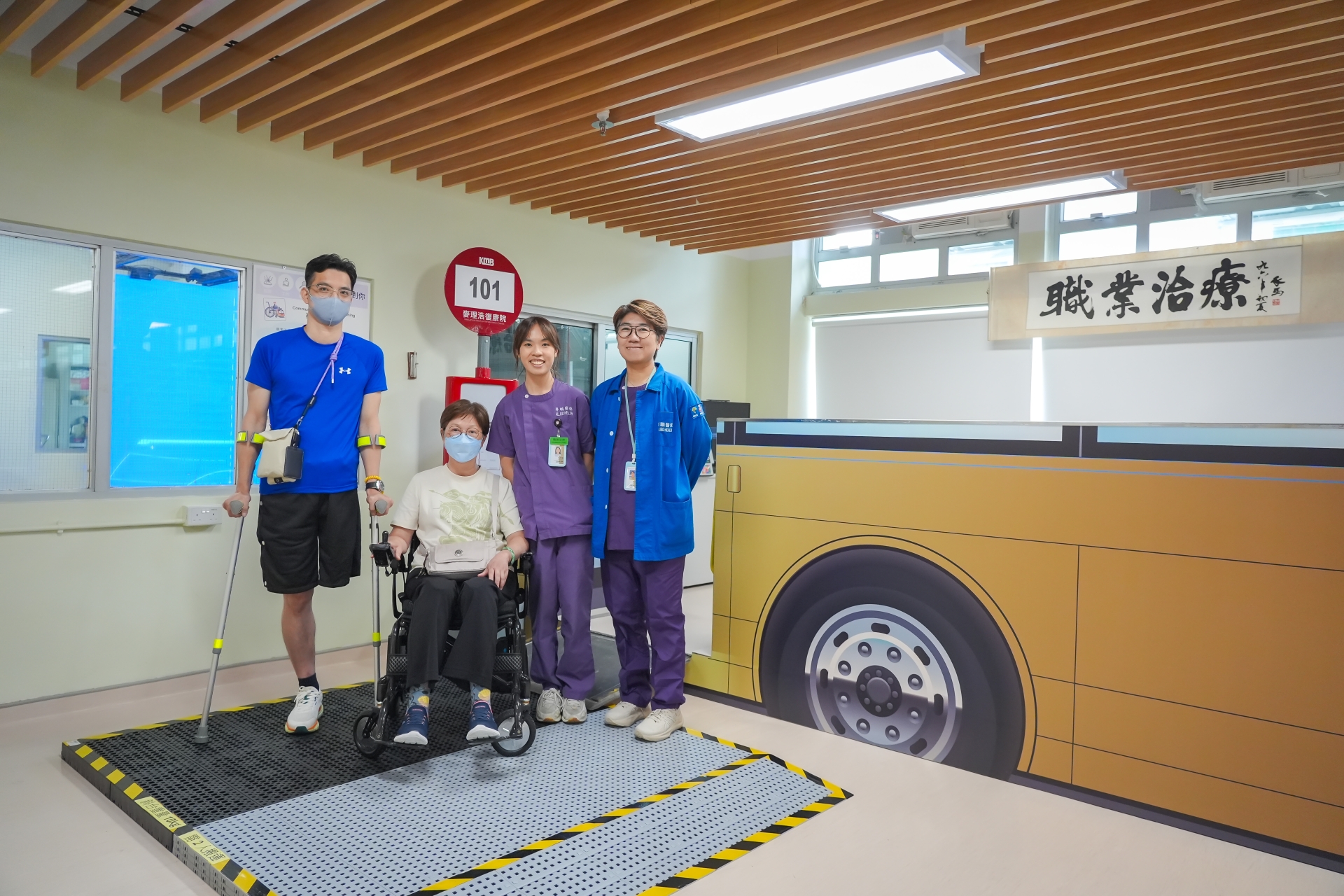
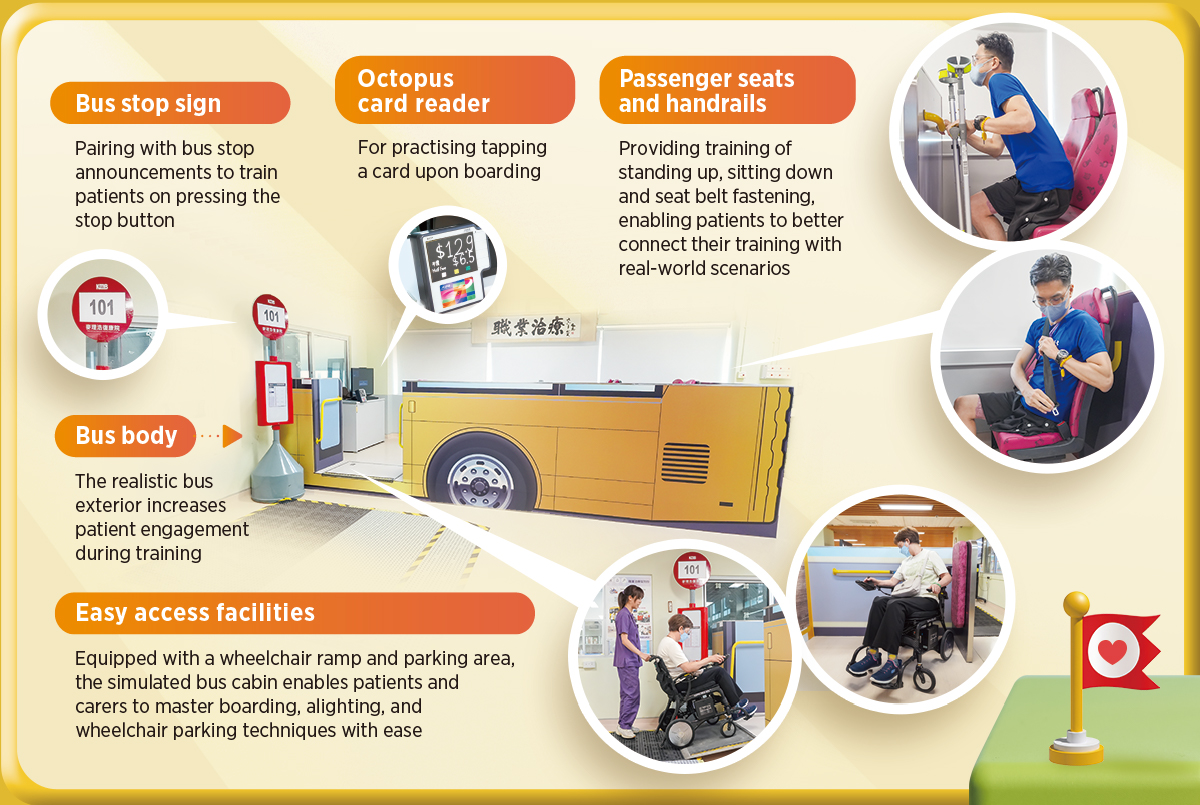
For most people, hopping on a bus is part of everyday life. However, for stroke survivors or patients recovering from orthopaedic surgeries, that small step onto a bus is like an insurmountable mountain. Hence, the Occupational Therapy team at the MacLehose Medical Rehabilitation Centre (MMRC) developed a bus boarding, alighting and riding training programme. The team also partnered with Kowloon Motor Bus to create a simulated bus cabin using real bus components to enhance the authenticity of the training environment, which is the first time for a public hospital to provide this kind of training for inpatients.
Terri Ng (first right in the main photo), Department Manager (Occupational Therapy) of MMRC says, "through practising in a 'real-life' setting, patients could regain the ability to travel independently. While it might seem like a small step, this progress can profoundly enhance their quality of life and boost their sense of self-worth." Occupational therapists can tailor challenges based on each patient's progress. For instance, they can have patients hang a shopping bag on a wheelchair, or encourage patients to press the bell according to the bus stop announcement, training patients' physical coordination, cognition and focus.
One small step to board, one giant leap for independence
Launched in January 2026, the programme serves patients with traumatic brain injury, stroke, amputation, and those who have received orthopaedic surgeries, along with their carers. Upon completing the programme, most participants have mastered the basic skills needed to travel by public transportation, leading to remarkable improvement in their physical functions, emotional well-being, and social lives.
Patient Mr Lo states that he practised boarding and alighting in a traditional therapy room, relying entirely on his imagination. The realistic environment of the simulated bus cabin allowed him to be more committed to training. Now he has greater confidence in travelling independently. Another patient Ms Ng also points out that this highly realistic environment allowed her to practise parking wheelchair repeatedly. She looks forward to travelling again despite the partial amputation.
With a vision to create an optimised driving rehabilitation setup, the team plans to leverage virtual reality technology to simulate street scenes visible from the bus window and install a steering wheel in the simulated bus. Additionally, cognitive training elements, such as bus route information, will be added to the bus stop sign, so as to expand the service to cover patients with cognitive impairments in the next phase.
The making of the simulated bus cabin