‘EASY buddy’ helps patients with special needs attend consultations with ease
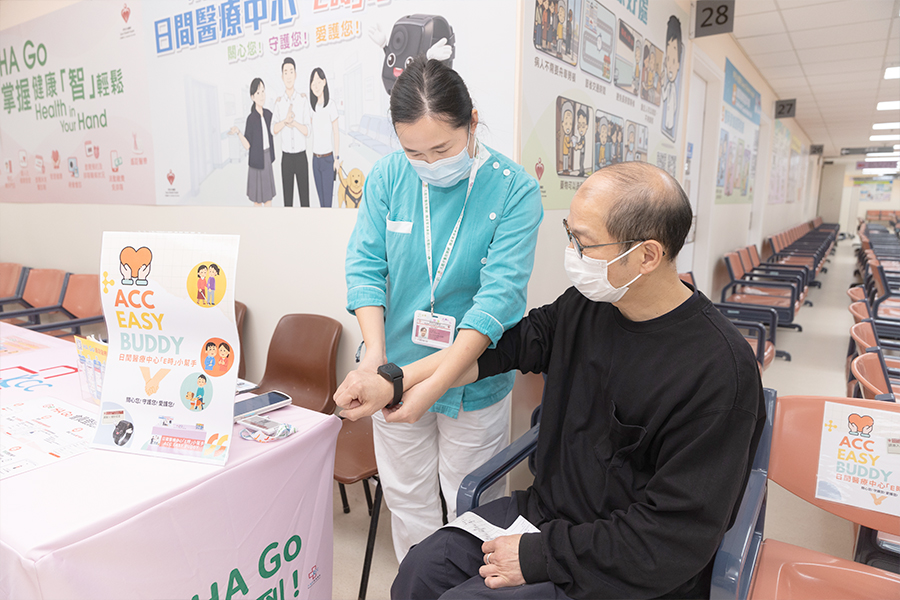 Patients attending specialist outpatient clinics often have to navigate various checkpoints, such as blood pressure measurement, blood taking, X-rays, and medical consultations. To help patients with visual, hearing, speech, or cognitive impairments complete their journey more smoothly and independently, Queen Elizabeth Hospital (QEH) has developed a device named ‘EASY buddy’.
The development of ‘EASY buddy’ fulfils a long-held wish of Sabrina Cheung, Department Operations Manager of the Ambulatory Care Centre. “Colleagues used to worry that patients with special needs might accidentally leave the centre while waiting, requiring staff to search for them; or that patients might miss their consultation because they could not hear their name being called.” This concern for patients prompted the IT department to develop the device. The system consists of a wristband with real-time positioning capabilities and a display card featuring an electronic ink screen. When it is time for the patient to proceed to the next step, the wristband vibrates, and the display card shows clear instructions, such as “Please go to blood taking room”, until the entire patient journey is completed.
Real-time positioning prevents patients from getting lost
The device utilises geofencing and Bluetooth technology. “If a patient is about to leave the premises, the wristband will vibrate strongly to warn them. Medical staff will then provide immediate assistance to prevent the patient from getting lost,” says Alex Lau, System Manager of the Kowloon Central Cluster Information Technology Division. The ‘E’ in ‘EASY buddy’ stands for ‘Enable’, signifying the use of technology to assist patients throughout the journey. Cheung notes that the system has been in use since last August. A visually impaired elderly patient shared that the device made her feel cared for without the burden of feeling constantly ‘watched’ by medical staff, resulting in a better patient experience. The system is currently applied in Orthopaedics & Traumatology, and Cardiothoracic Surgery Specialist Outpatient Clinics. The team is piloting the addition of a voice prompt feature to assist visually impaired patients and will continue to share their experiences with other hospitals. They also expressed gratitude for the full support from hospital management.
‘EASY buddy’ patient journey
1. Collect patient journey slipPatients collect a patient journey slip listing the consultation steps at the kiosk.
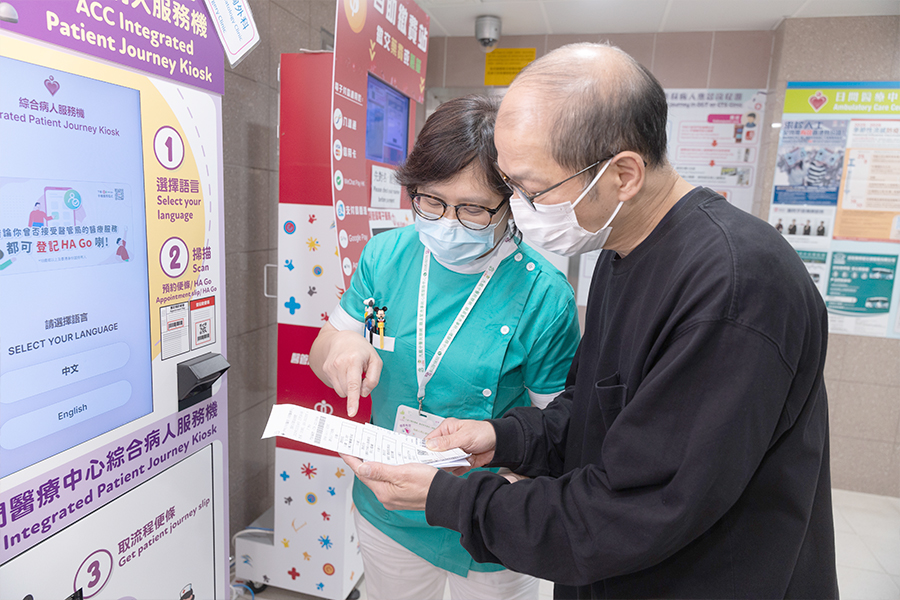 2. Wristband vibration alert
Patients in need collect a wristband and a display card at the service station. When the wristband vibrates, proceed to the location shown on the card.
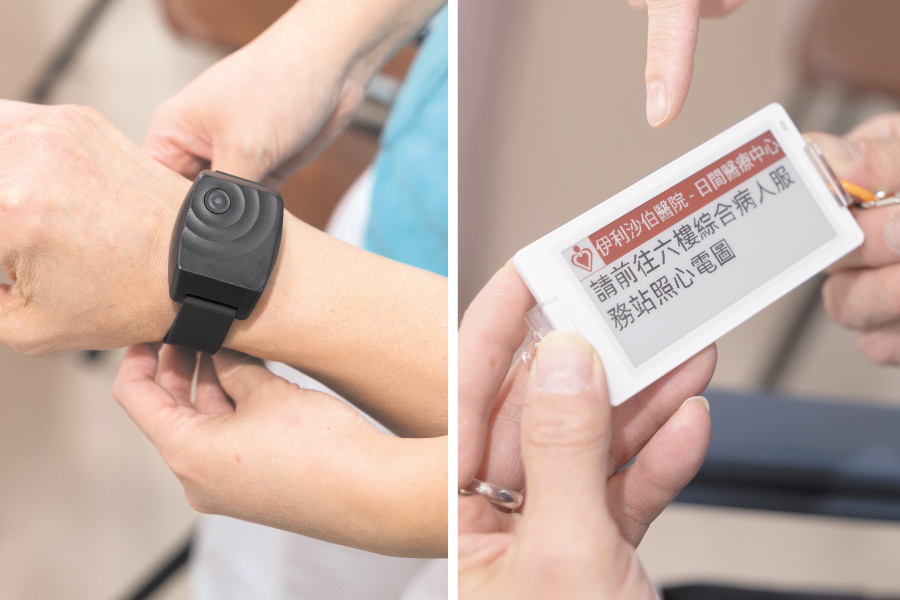 3. Follow the instructions to proceed
Patients complete the check-ups according to their personal patient journey. For example, the patient in the photo is instructed to proceed to the Integrated Patient Services Station for an electrocardiogram.