CHIMP: Real-time patient condition monitoring
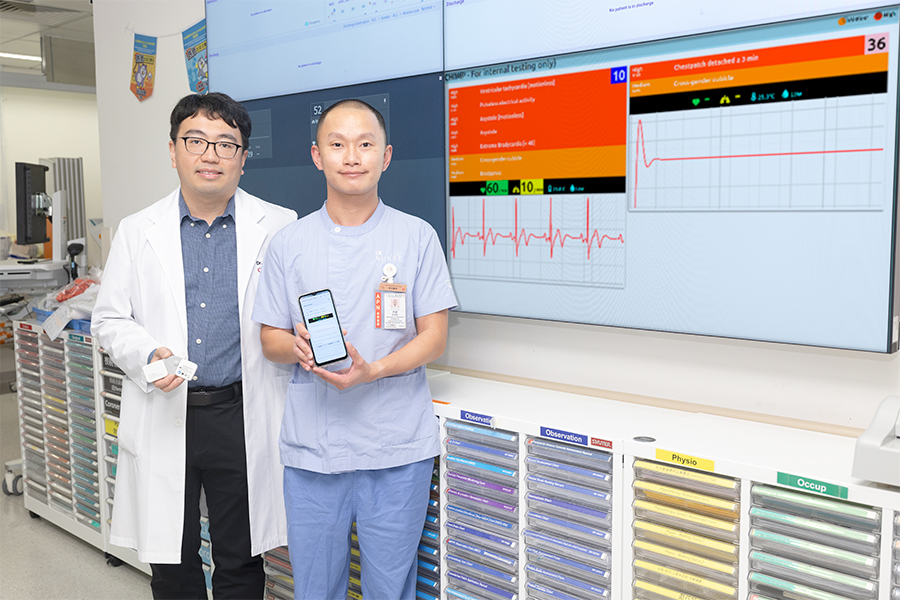 One of the major challenges for medical teams in ward care is the early detection of sudden changes in a patient’s condition and providing timely intervention. For patients of low to moderate disease acuity, general practice typically relies on intermittent monitoring, where medical staff measures vital signs, e.g., blood pressure and blood oxygen every four to six hours. However, a patient’s condition can change in an instant, and intermittent check inevitably creates blind spots. Connecting patients to large monitoring equipment is not only a complex process but also restricts their mobility, which can hinder the recovery.
A mini wearable device with 3-in-1 functionality
The Hospital Authority (HA), Tin Shui Wai Hospital (TSWH), and the Hong Kong Applied Science and Technology Research Institute have co-developed the Continuous Health Information Monitoring Patch (CHIMP), a comprehensive inpatient monitoring system. This palm-sized, lightweight device is attached to the patient’s chest to measure vital signs and track location and movement at any time. Data is transmitted via Bluetooth to the cloud for artificial intelligence (AI) analysis. If an abnormality occurs, the system immediately notifies frontline medical staff through ward dashboards and work phones for prompt follow-up.New Territories West Cluster Coordinator (Information Technology/Information Systems) Dr Lui Chun-tat states: “Every time the weather turns cold, we see an increase in patients admitted for cardiopulmonary conditions such as chronic bronchitis or heart diseases. The CHIMP can assist in continuous monitoring, it is easier for medical staff to detect sudden changes like arrhythmia earlier, enabling timely intervention and preventing serious complications.” During the pilot phase, the system successfully detected abnormalities in over 100 patients. Coe Hui, TSWH Advanced Practice Nurse (Ambulatory Services Centre/Medicine & Geriatrics/Mixed Specialty Ward), shares: “The response from both colleagues and patients has been very positive. Some patients expressed that they feel safer wearing the device, and its lightweight design does not interfere with their daily activities.”
Anatomy of the design
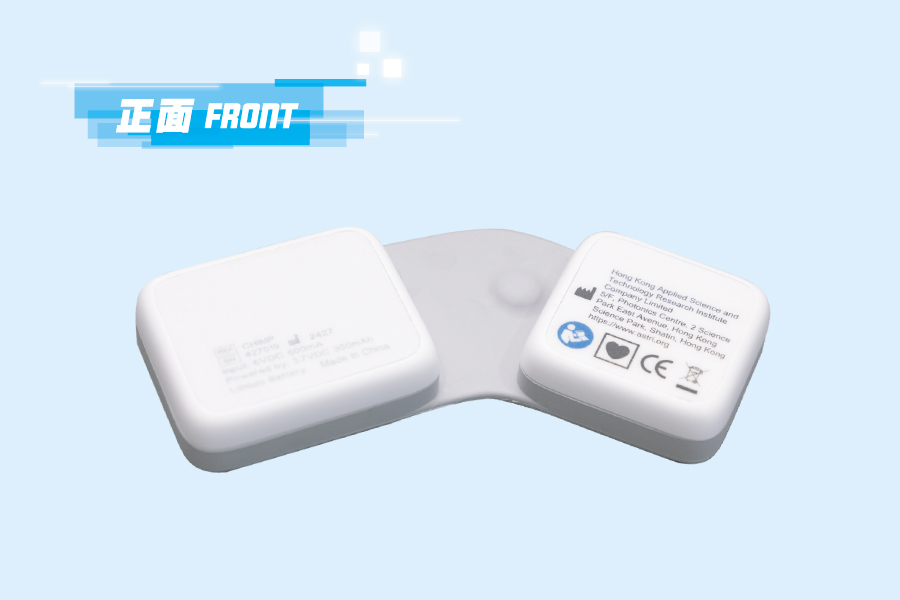 1. Positioning and geofencing system
Specifically designed for patients with dementia or those at risk of wandering; the system issues an alert if a patient leaves a designated area.
2. Motion sensor and fall detector
Accurately detects body movements; if a patient accidentally falls, the system sends an immediate notification.
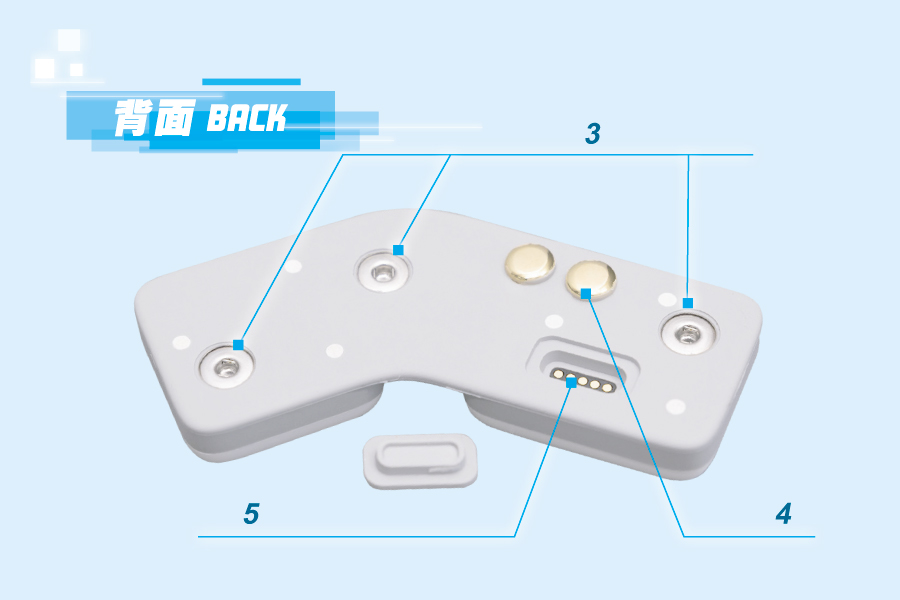 3. ECG monitoring
Accurately captures electrocardiographic (ECG) data through three contact points, with AI analysing changes in the patient’s condition.
4. Sweat sensor (pilot phase)
Detects abnormal perspiration levels, which helps in identifying conditions such as heart attacks or renal colic.
5. Special charging port design
Easier to clean than standard ports, preventing dirt accumulation and ensuring hygiene and safety.