
The legacy of St. John Hospital’s past
The name tells a story of its history
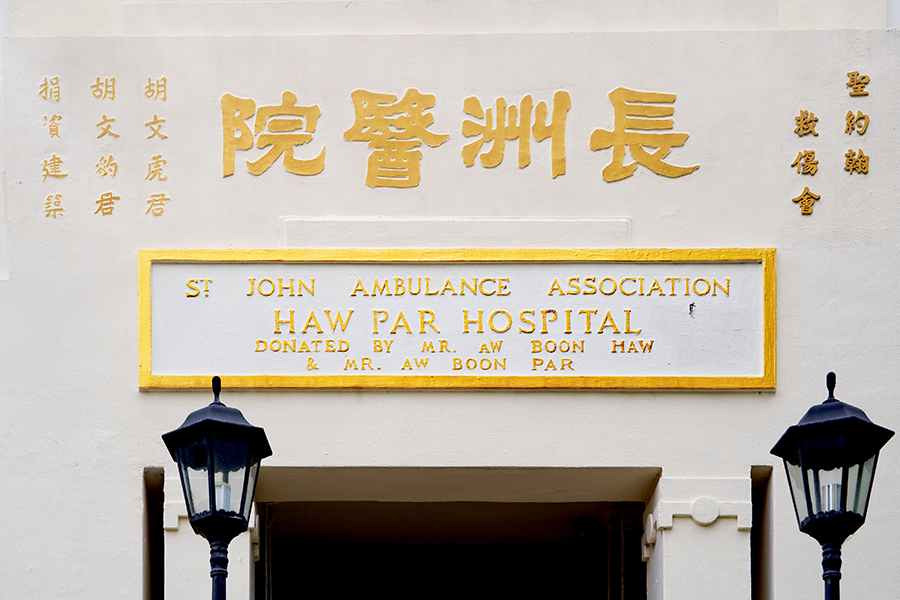 The main entrance of SJH still engraves with its Chinese name when it was founded in 1934. The English name is Haw Par Hospital — a reference to donors Aw Boon-haw and Aw Boon-par whose given names meant ‘tiger’ and ‘leopard’ respectively. The two brothers generously funded the hospital’s construction. As the hospital was established under the St. John Ambulance Association, it was also named St. John Hospital (SJH) — a name that remains in use to this day.
Islanders express their gratitude
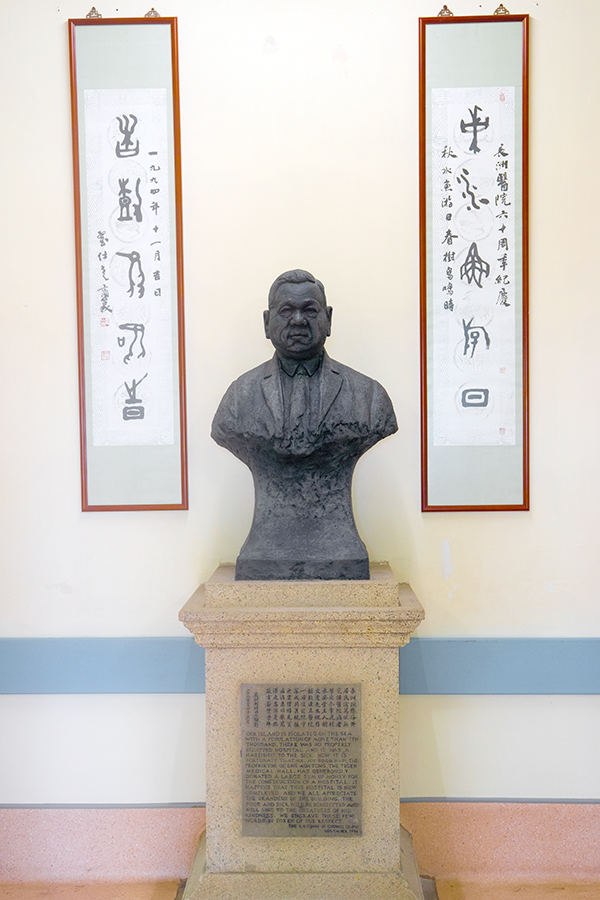 A statue of Aw Boon-haw stands in the main lobby of the hospital. Beneath it is a commemorative plaque erected by the residents of Cheung Chau, inscribed with these words: “Our island lies isolated across the sea, with over 10,000 residents. Without a well-equipped hospital, the sick has long suffered.” The inscription captures the difficult reality faced by islanders before the hospital was built. It also shows how the poor and sick finally received proper care when the hospital was completed – and the community remained deeply grateful to the Aw brothers for their generous donation.
A newborn arrives in the eye of a storm
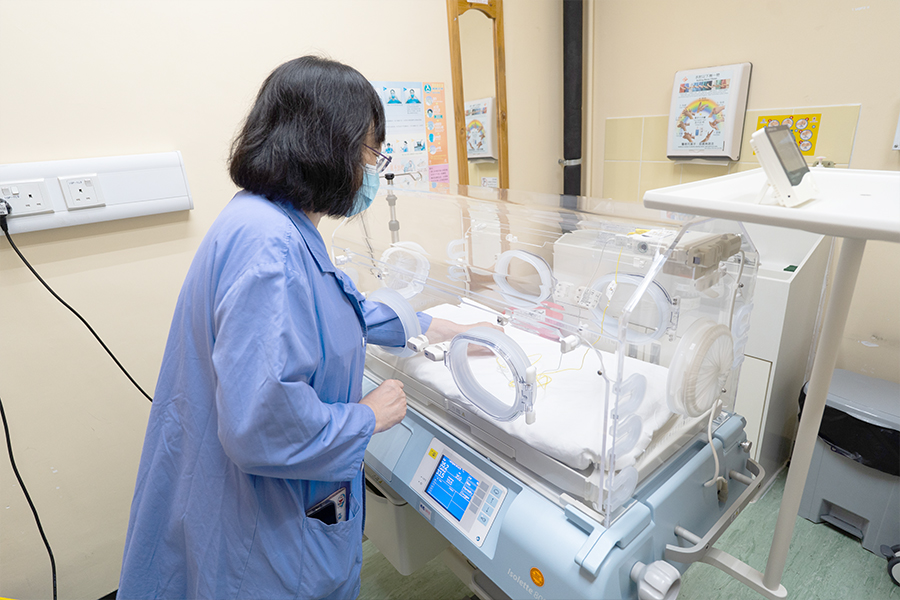 When Super Typhoon Hato lashed Hong Kong in 2017 and the No. 9 signal was hoisted, a pregnant woman was admitted to SJH. The medical team assessed her condition and confirmed both mother and baby were stable. Soon after, No. 10 typhoon signal was issued, making her transfer to another hospital impossible. The team quickly prepared the neonatal resuscitator and infant incubator. Thanks to their swift response, the baby was delivered safely, and both mother and child were in good health. That evening, after the No. 8 signal was lowered, the Government Flying Service resumed operations and airlifted the pair to Queen Mary Hospital for further care.
The riddle of boundary stone no. 14
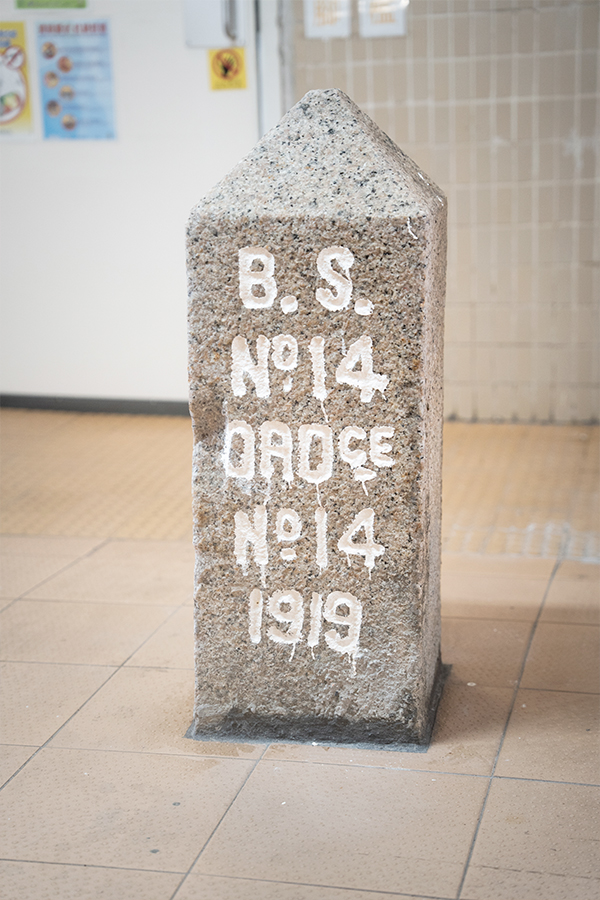 In 1919, the Hong Kong government issued an ordinance to establish a boundary between Chinese and expatriate communities in Cheung Chau. Fifteen boundary stones were erected to demarcate the southern hilltop as a residential zone reserved for non-Chinese residents. Anyone wishing to build in this area required government approval. The boundary stones, each about half a metre tall, have survived and are now regarded as historical relics. Boundary Stone No. 14 still stands in the corridor outside the kitchen of SJH.
Where east meets west in architecture
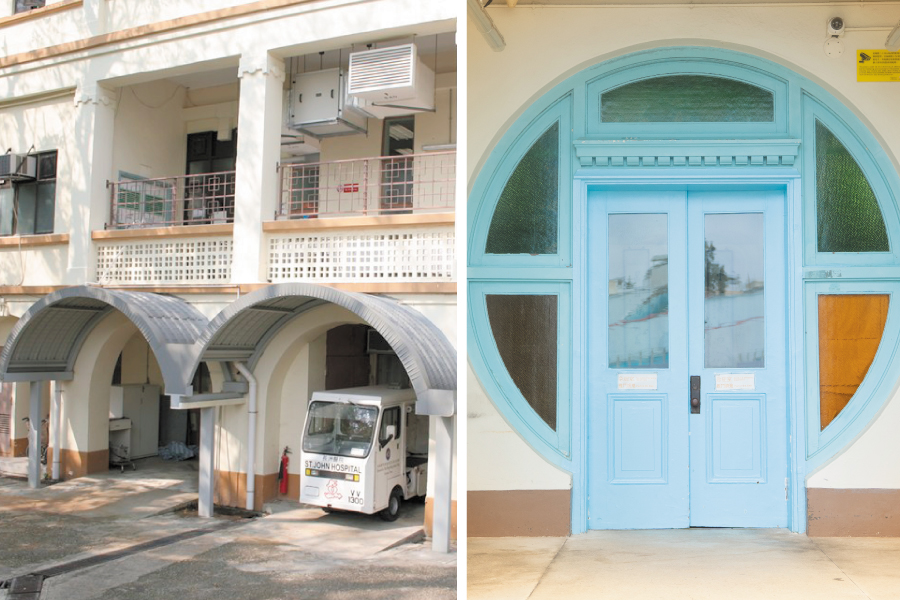 The hospital building was declared a Grade III historic building in 2010. The three-storey structure features a blend of Western neoclassical design and traditional Chinese architectural elements. The main entrance includes a round moon gate framed by stained-glass windows, while the ground floor features arched corridors and colonnades, creating a harmonious blend of Eastern and Western architectural elements.
Interview video