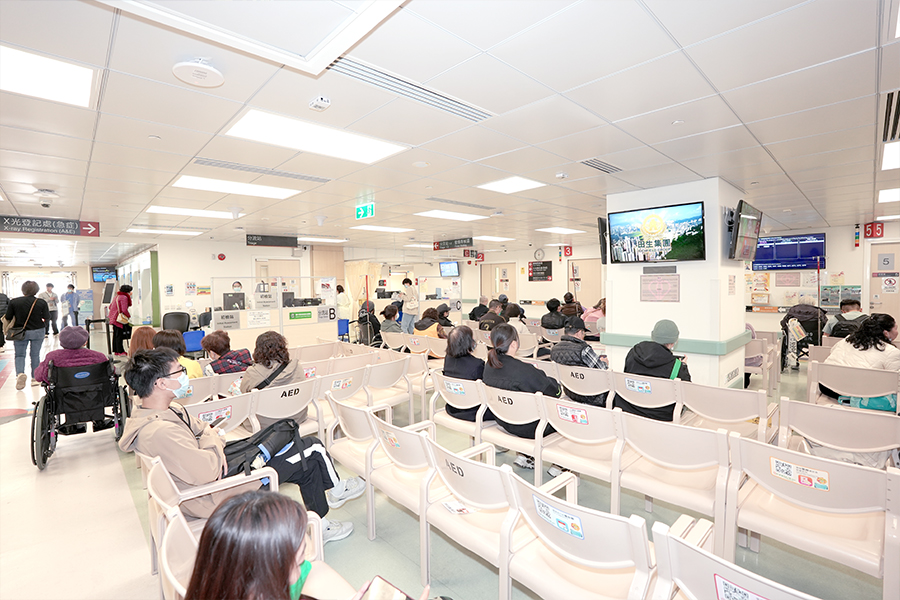
Self-service enquiry of the patient location via i-Enquire at A&E
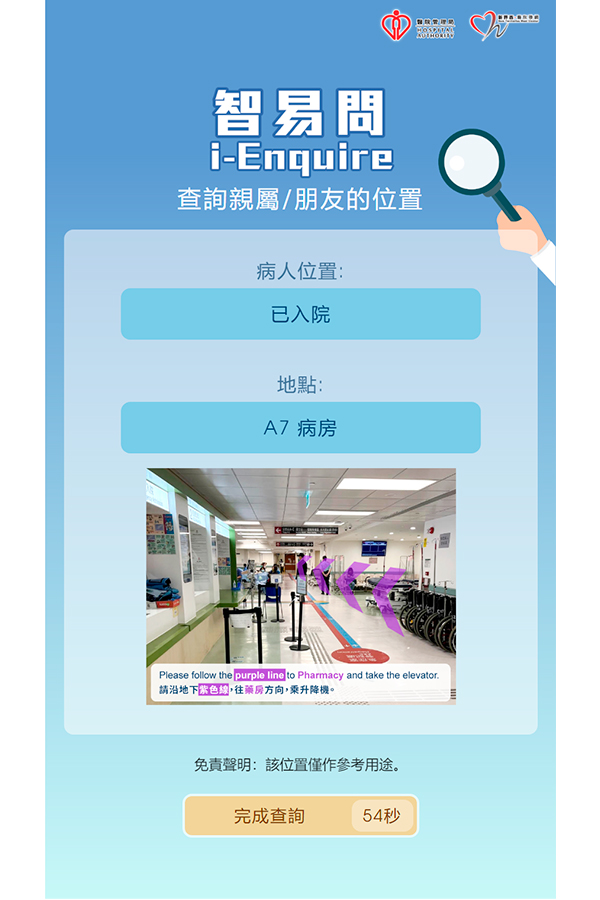
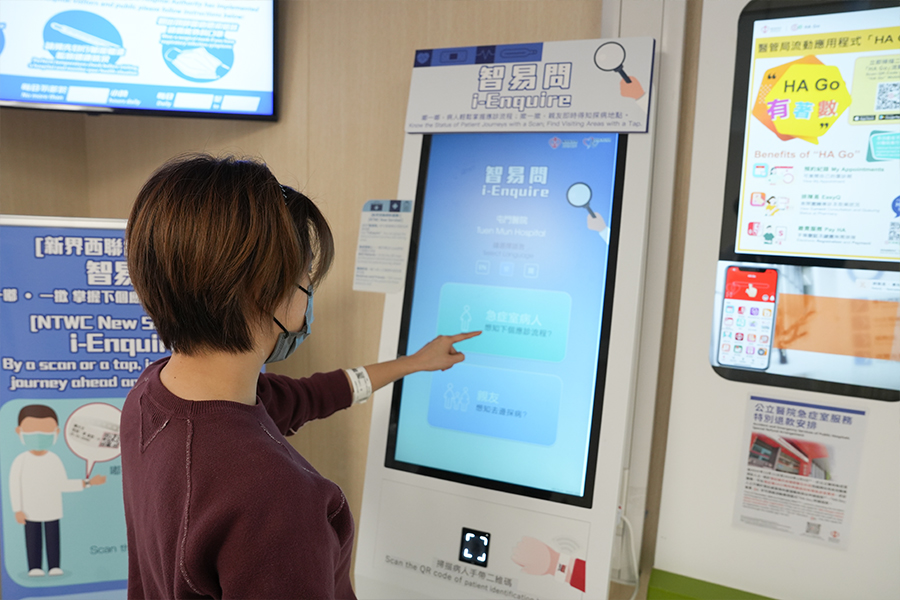 Earlier this year, the New Territories West Cluster (NTWC) has implemented its latest smart hospital project, i-Enquire, at the Accident and Emergency (A&E) Department of Tuen Mun Hospital (TMH), to facilitate self-service enquiry on the patient journey ahead and patient location by patients or their relatives. Each patient in the A&E departments is provided with an identification bracelet containing a QR code. By scanning the QR code with i-Enquire, the patient is able to know the tests and treatments required such as electrocardiograms and X-rays, as well as their current status. Additionally, if relatives and friends enter information of the corresponding patient into i-Enquire correctly, the system will show the patient's current location, whether the patient is in the waiting hall, cubicle bed area, observation area of A&E department, or has been transferred to ward.
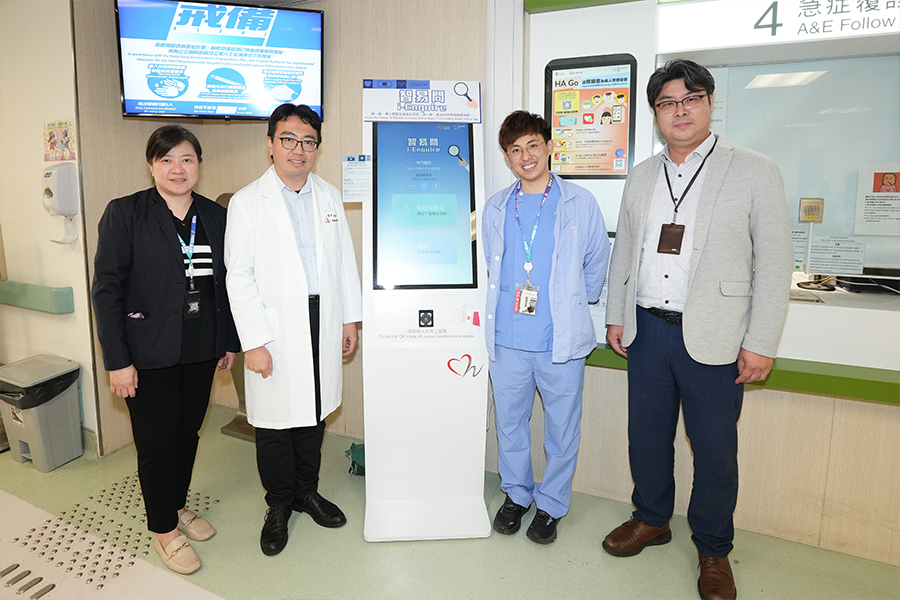
 Dr Lui Chun-tat (second from left in the photo below), Cluster Coordinator (Information Technology/Information Systems) at NTWC, states “patients and their families often have many questions when they arrive at the A&E departments. For example, patients usually ask the A&E nurses, ‘when will I see the doctor? How long do I have to wait? What am I waiting for?’ Another situation is that the patients are unable to tell relatives their location clearly, especially when they are in critical condition, which makes their family members particularly anxious when they come to the hospital and searching for the patient. We hope that there will be a way for them to know patients’ location as soon as possible, which is the original intention of developing i-Enquire.”
Strictly protect patient privacy from random trials
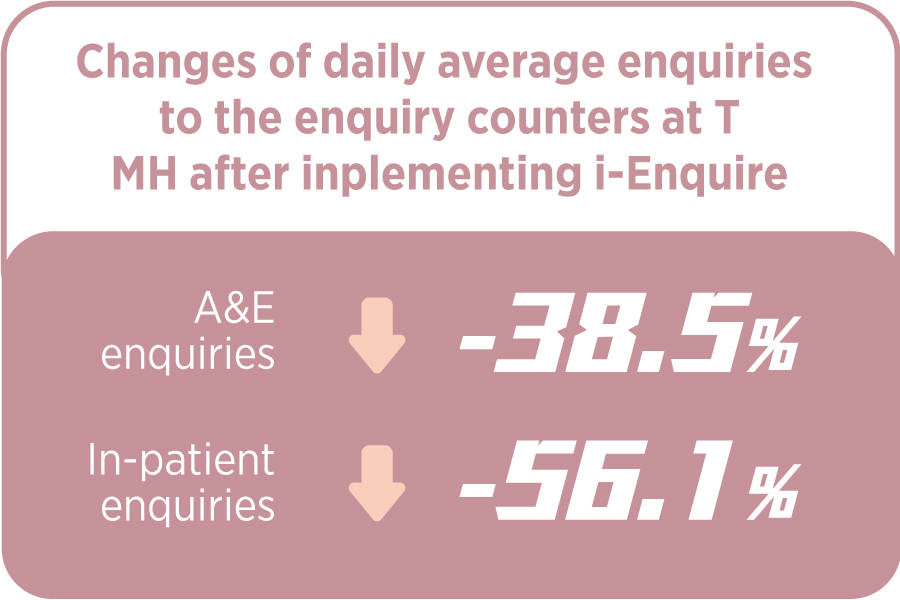
To find out where to visit a patient, family and friends must complete the verification process, starting with entering the patient's ID card number or contact phone number, and then correctly matching the patient's basic information on the screen, including name, age group and gender, etc. The verification process aligns with the process in enquiry counters. “We attach great importance to the protection of patient privacy and information security, and have incorporated a number of elements into the design of the system to prevent others from obtaining patient information by random trials. On the other hand, a patient privacy impact assessment was conducted prior to the launch of i-Enquire, so as to ensure that the operation is fully compliant with Hospital Authority (HA)'s guidelines and policies on the protection of patient privacy,” Dr Lui emphasises. A privacy filter is affixed to the screen of the kiosk to prevent leakage of patient privacy information.A&E departments are always busy. The self-service enquiry system does not only facilitate patients and their families, but also helps relieve the pressure on A&E nurses and enquiry counters staff. Since the establishment of i-Enquire in the A&E Department at TMH on 8 January, there were 398 and 65 patient journey and location enquiries using i-Enquire in four weeks respectively, while the average number of enquiries handled by the enquiry counters per day was reduced significantly (see table). The public was also generally satisfied with the performance of i-Enquire, with 92% of the users who enquired about patient location giving a rating of 4 stars or above (up to 5 stars).
 Co-developed by NTWC and the Information Technology Department of the HA Head Office, the use of i-Enquire has been gradually extended to Pok Oi Hospital (POH) and Tin Shui Wai Hospital (TSWH). In the future, the cluster will consider providing more information via i-Enquire, Dr Lui says.