Data collaboration for research and development
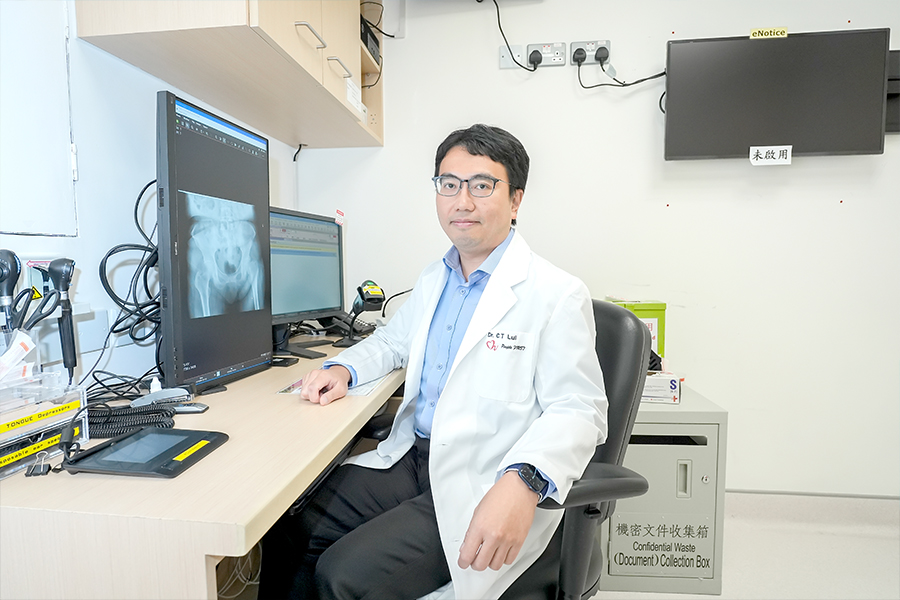 “When an injured patient underwent X-ray hip, sometimes the hip fracture is obvious while sometimes the diagnosis is not easy especially for subtle non-displaced fracture. The accuracy of the Artificial Intelligence (AI) system is so high that it is on par with that of a specialist. For younger doctors, it is like having a consultant at their side to provide advice,” says Accident and Emergency Department Consultant of the New Territories West Cluster Dr Lui Chun-tat. He points out that winter is the peak season of fall incidents for elderly, and the ‘AI for Hip Fracture Detection’ system can effectively help doctors identify hip fractures with 96% accuracy.
“Combined with clinical diagnosis, doctors can arrange appropriate procedure, operation or rehabilitation treatment more quickly, and the system has received very positive feedback from colleagues since its implementation,” he says. He believes that this example demonstrates how the utilisation of big data in healthcare can facilitate the development of innovative technologies and clinical services for the benefit of patients. The ‘AI for Hip Fracture Detection’ is one of the successful cases since the Data Collaboration Lab opened in 2018 which then facilitates researchers from eight universities to conduct technology research and medical data analysis. At that time, Hospital Authority (HA) provided X-ray films to the university research team for AI training, and successfully developed and validated the system, which was subsequently rolled out to all hospitals and clusters to truly benefit patients.
Explore converting research outcomes into healthcare services
In line with the government’s policy in promoting scientific research, HA has further expanded to allow eligible innovation and technology (I&T) enterprises in Science Park to use HA clinical data for research and development purposes. Starting from March 2024, I&T companies are able to access anonymised data of around 200,000 patients from the HA database, covering patients’ demographic characteristics, attendance records at hospitals or clinics, clinical diagnoses, surgeries or other medical procedures, medication and examination results, etc. Up to date, HA has supported 10 research institutions in Science Park to conduct studies.Dennis Lee, Senior Systems Manager of HA, highlights initial collaboration with Hong Kong Science and Technology Parks Corporation (HKSTP) to promote research. “We’ve received positive initial feedback from users who find the data valuable for research,” he continues, “drawing from our experience in opening up the data platform, we will further assess the potential for its expansion to support developing Hong Kong into a global collaboration research hub. Our primary focus is always the protection of patients’ privacy while clinical data are put to good use in research and development for the benefit of patients in Hong Kong and around the world,” he explains.
 Dennis says that since the establishment of the Data Collaboration Lab, the research results have been very positive. “By making our data accessible to universities, it has provided data support to about 400 researchers and over 60 research projects. Among them, 34 research results have been published in various international journals or conferences, and have generated substantial impact on the research atmosphere in Hong Kong.”
Currently, HA is still coordinating with the universities on introducing other projects into clinical services, to translate research into impact. This includes the prediction of patients’ risk of developing liver cancer and heart disease. Dr Lui is looking forward to introducing more new intelligent systems. “Based on past experience, as long as they can help our patients, colleagues will welcome them and be willing to learn new modes, and I believe the implementation in hospitals will be very smooth,” he says.