Good preparation as the key to combating stress
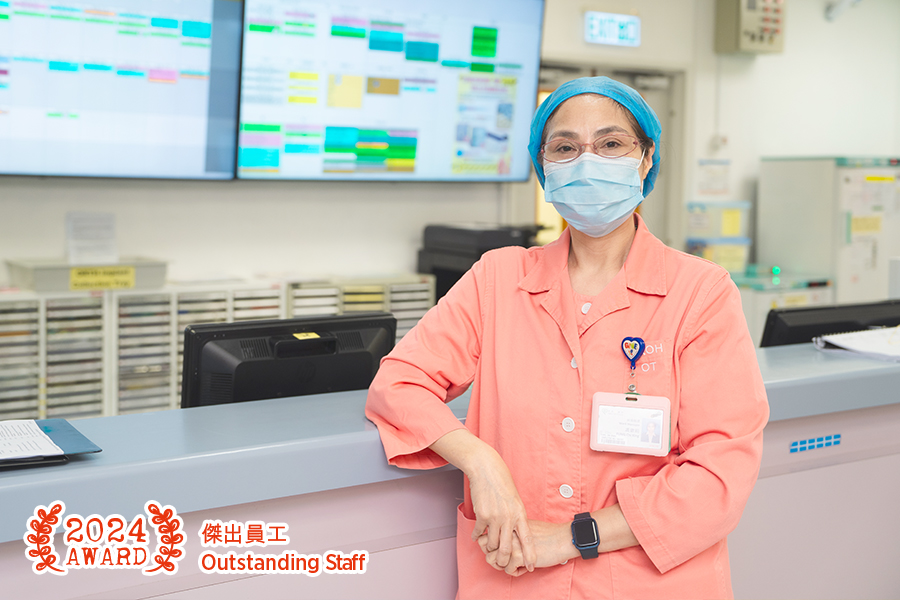 Fung Chi-king
Ward Manager (Integrated Disinfection & Sterilization Services), Tseung Kwan O Hospital
Fung Chi-king joined the Hospital Authority after graduating from nursing school. Although she worked in several hospitals over the past 36 years, she unwaveringly chose to work in the operating theatre. “The pressure of working in the operating theatre is definitely high, but I have learnt a lot here,” she says. “As technology and techniques evolve, procedures for the same operation change over time, motivating me to keep learning and absorbing new knowledge.”
The work of operating theatre nurses requires meticulous attention to detail and the ability to remain calm in the face of challenges. Every detail of an operation can be a matter of life and death – from preparing the equipment and medical supplies beforehand, to passing instruments to the surgeon and assisting with traction, to checking the patient’s recovery process and observing the patient’s vital signs after the operation is completed. Good preparation is the key to coping with stress, Chi-king believes. “I have to be well-prepared. Before each operation, I go through the notes and rehearse the entire procedure in my head. The most ideal way is to know what instrument is needed before the surgeon says it and to be ready to pass it on, so that the operation can run efficiently.”
Chi-king took part in Tseung Kwan O Hospital’s Fast-track Surgery Programme in 2010, which reduced waiting times from two years to three months with the completion of more than 200 non-emergency operations per year, including hernia surgery, gall bladder surgery, and varicose vein procedures. She believes that technology will continue to make operations more efficient and hopes medical staff will not lose sight of their original mission of patient care in pursuit of speed. “Patients feel nervous when they enter the theatre, so I often remind my new colleagues not to just focus on preparing equipment but to take care of the patient’s feelings and take the time to explain the procedures to them,” she says. “For patients who are particularly nervous, a small gesture such as holding their hands can help soothe their emotions and give them confidence. Technology is only a tool. The most important thing is to care for the patient.”