Extra pairs of hands to safeguard each other
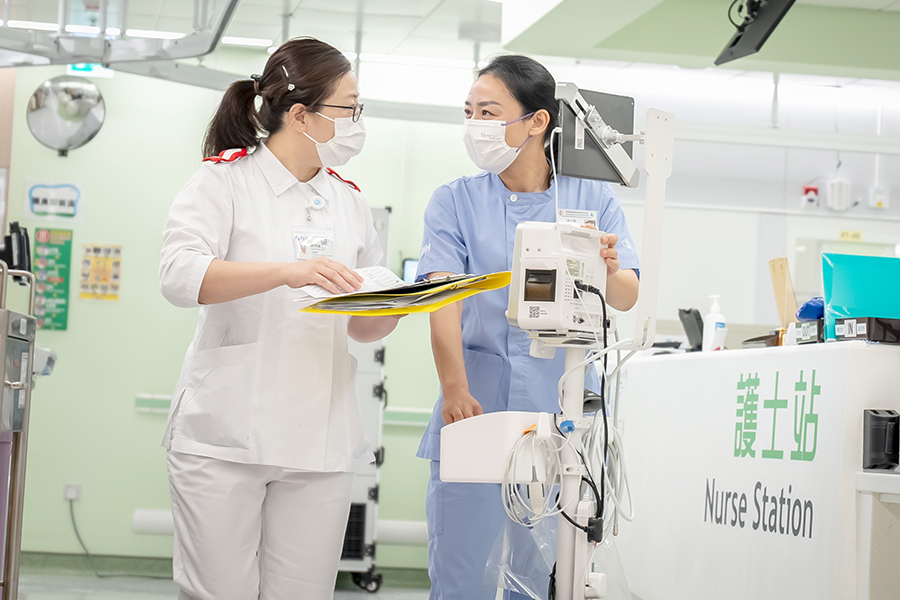 “When the ward was short-staffed in April last year, the GBA nurses came over and offered help with basic nursing care, such as measuring patients’ blood pressure and temperature, feeding them, or helping turn them around and changing diapers. It made a big difference to us to have those extra pairs of hands. Later, they even involved in case management, helped prepare patients for discharge.” Advanced Practice Nurse of Geriatric and Rehabilitation Services at Haven of Hope Hospital (HHH) Chan Pok-yee reflects.
Xu Xiao-he from the First People’s Hospital of Foshan was among the first intake of exchange nurses. She has 15 years of experience and worked in the medical-surgical, accident and emergency, and intensive care units before working in a stroke unit for more than 10 years. She began her clinical practicum at the Department of Medicine and Geriatrics of United Christian Hospital in last April and then rotated to the rehabilitation ward at HHH in September. Pok-yee was her mentor and praised her for her experience and attitude. “A 62-year-old patient suffered from a stroke and lost his muscle strength. He was unable to sit up in bed and he was mentally devastated. He also refused to cooperate with the rehabilitation treatment,” she recalls. “Xiao-he often came to his bedside to cheer him up, sharing with him the example of her stroke patients in the Mainland who could walk again and explaining how physiotherapy could help him regain his mobility. Xiao-he successfully motivated him to follow the doctor’s instructions and do rehabilitation exercises, and one month later, he was able to walk a little bit with support.”
Staying for nearly a year, Xiao-he was touched by the kindness of the Hong Kong nurses who helped her and her GBA colleagues adapt to their new environment. “When we first arrived in Hong Kong, we were unfamiliar with the jargon used on the wards, so our colleagues provided us with a list of commonly used terms,” she explains. “When the weather got cold, they asked if we needed more blankets in our dormitory, and during festivals we were invited to after-work dinners. We were treated as part of the team which was very moving.” Mother-of-two Xiao-he missed her children during her 10 months in Hong Kong but was kept busy throughout her stay. The exchange included not only clinical practicum but also regular seminars covering everything from primary care to chronic disease management and operation of acute hospitals. It is worthwhile to be part of it, Xiao-he says.
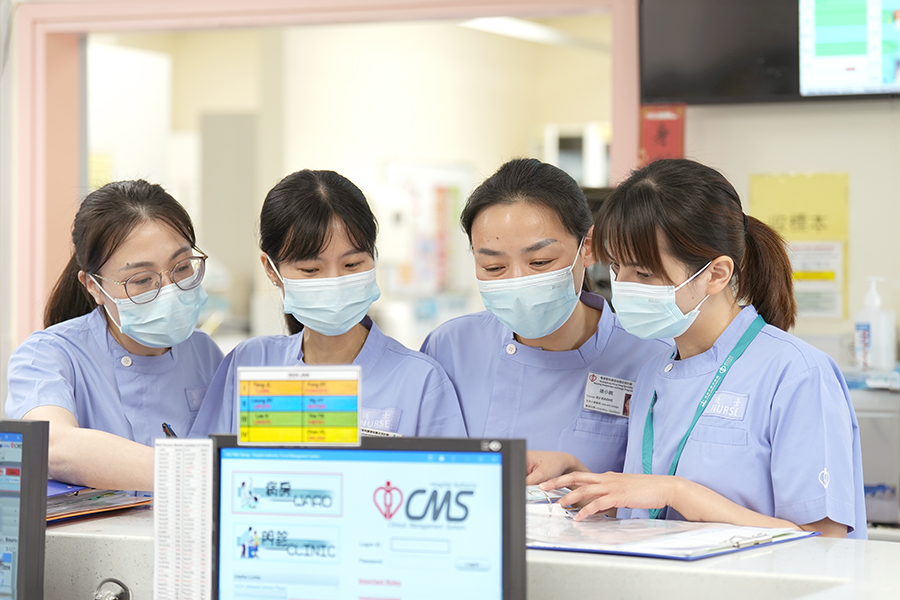 Xiao-he says she will encourage her colleagues in Foshan to take part in future exchange programmes. Around 100 more nurses have already arrived in Hong Kong as the second intake which has been extended from geriatric care to cover more specialties including cardiac intensive care, adult intensive care, perioperative care, ophthalmology, and endoscopy.