KWH redevelopment: Care with 5G technology in a century-old heritage
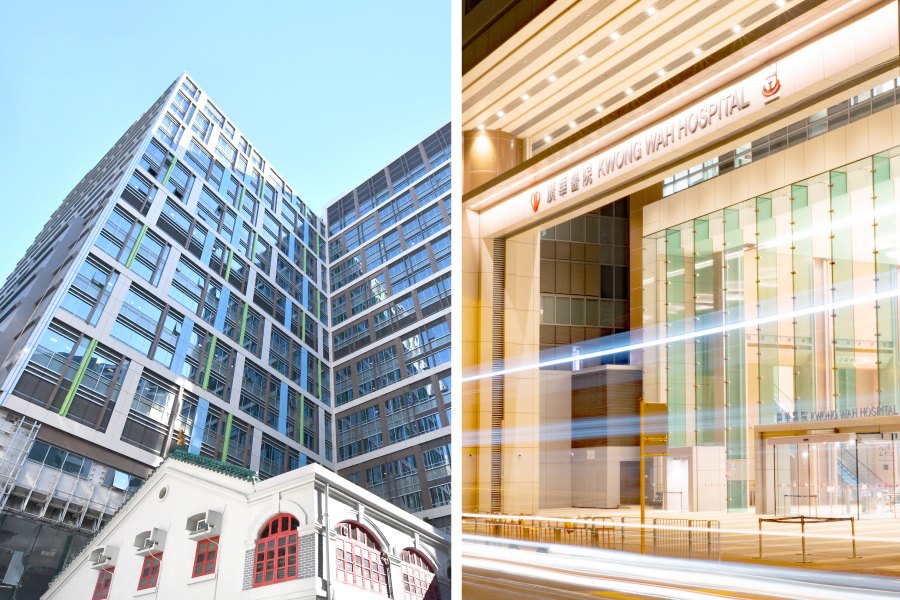 The phase 1 building of the Kwong Wah Hospital (KWH) Redevelopment Project has commenced services, making it the first public hospital in Hong Kong introducing a 5G network throughout the whole building for more efficient medical services. Hospital Chief Executive Dr Tang Kam-shing says the building will focus on the development of ambulatory care to cope with the demands arising from ageing population and prevalence in chronic diseases, fulfilling the hospital’s initial mission of serving the public by leveraging the latest technology.
“The most iconic design element of the building is that the original hospital lobby in 1911 (now the Tung Wah Museum) can be seen from the atrium, representing its unswerving role to serve the Yau Tsim Mong community,” says Dr Tang, adding that the design concept was adopted from the outset of the Redevelopment Project to reflect the hospital’s value to uphold the mission ‘to heal the sick and to relieve the distressed’. The building has taken advantage of 5G technology not only for patient convenience but also for the more effective operation of hospital services, Dr Tang points out. “The 5G network supports telemedicine and electronic systems,” he explains. “We can develop those systems, so that we don’t have to rely on manual counting of materials. Tracking functions may even be applied to hospital navigation and other services.”
5G modular operating theatres
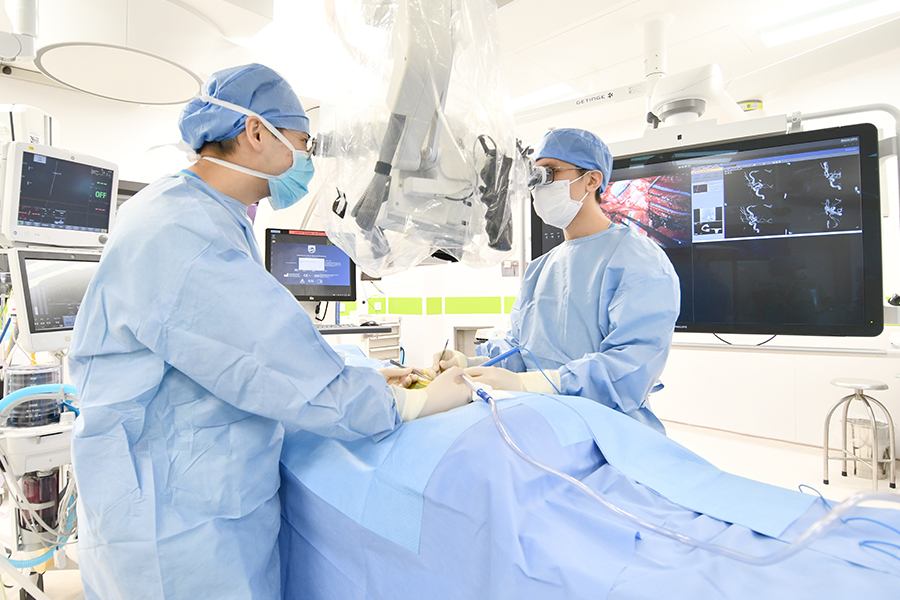
There are 14 new 5G modular operating theatres (MOTs) in KWH’s phase 1 building. Dr Koo Chi-hung, Chief of Service of Department of Anaesthesiology and Operating Theatre Services, says that there are increasing demand for multidisciplinary care in surgery. The 5G technology allows surgery to be broadcasted in real time so that surgical teams in different locations can participate and offer advice. Telesurgery can be gradually developed, which allows surgeon to control the operative instruments via 5G enabled equipment remotely without being present.Arthur Loh, System Analyst of the Information Technology Department at Kowloon Central Cluster, says 5G network offers high bandwidth and low latency, which allows real-time transmission of audio and video feed to medical teams outside the OT. Remote teams can also make notes on the surgical screen by using a 5G tablet. Healthcare staff are now able to participate in real-time surgery as long as they are carrying their 5G mobile device.
Expansion helps enhancing patient flow
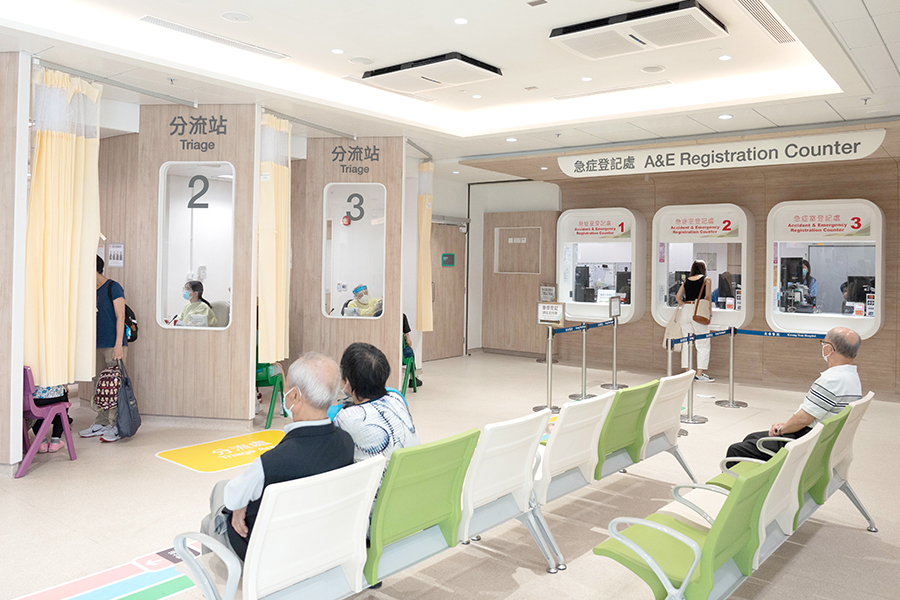
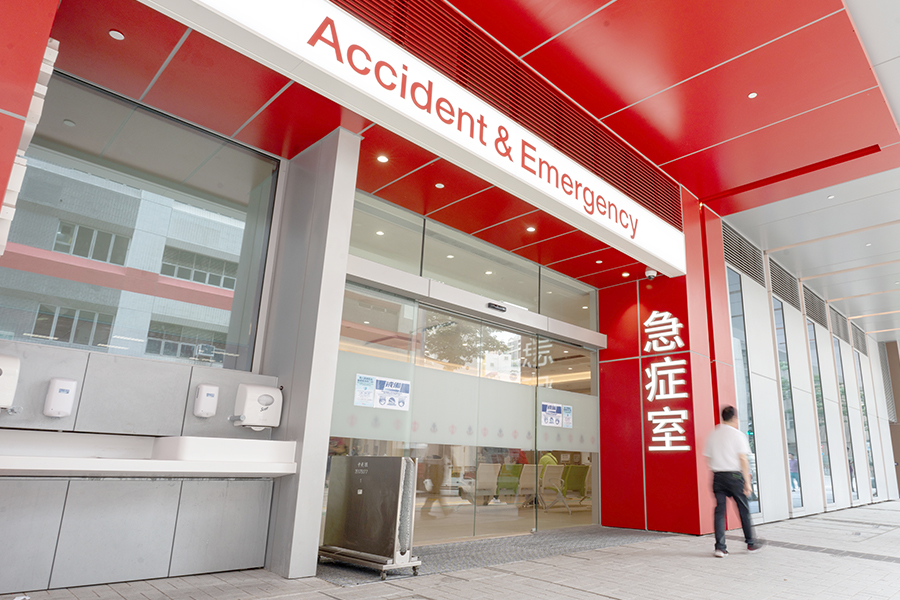
KWH’s new Accident and Emergency (A&E) Department is 2.6 times larger than the old one. In addition to the central consultation cubicles, there are five resuscitation rooms, six consultation rooms, and six negative pressure rooms. Fanny Leung, Department Operations Manager of A&E, says the increase in space has helped to streamline the patient flow. “The old unit was crowded with people waiting for triage and consultations. Furthermore, bedridden and wheelchair-bound patients had to congregate in the main lobby,” she explains. “Now, all areas are clearly delineated for holding different patients, and bedridden patients stay in a waiting area with better privacy.”Fanny recalls, “in the past, patients had to go back and forth six or seven trips between waiting hall and consultation or treatment rooms before they could complete the consultations and necessary examinations, but now the route planning is based on the patient experience. For example, the CT service is located next to the A&E so that emergency patients such as those who have suffered from strokes can be diagnosed earlier and treatment can be speeded up. The loading bay for ambulance is directly connected to the resuscitation room area, patients can be attended immediately for resuscitation.”