Grasp the nettle with togetherness
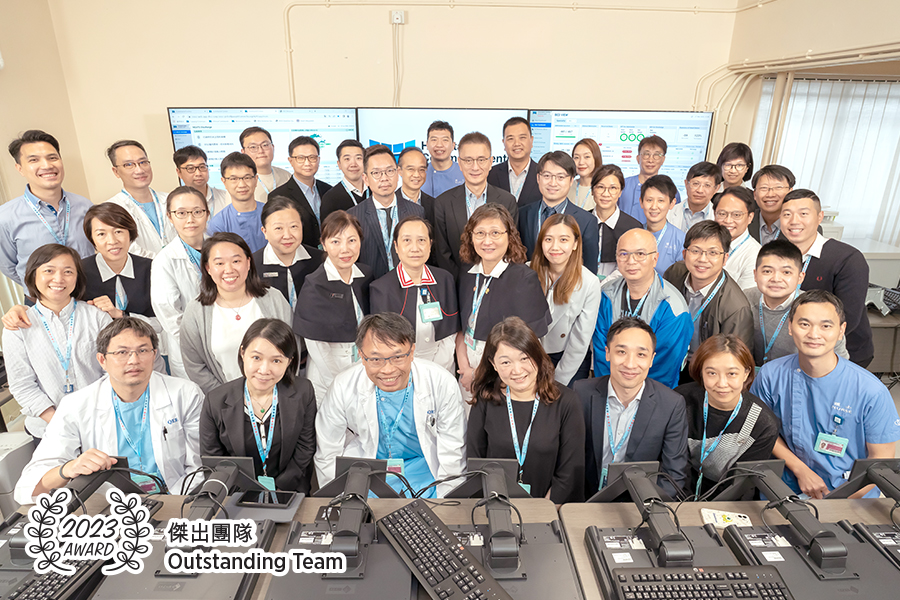 Queen Elizabeth Hospital Command Centre
Queen Elizabeth Hospital
The Hospital Command Centre was launched at Queen Elizabeth Hospital (QEH) two years ago to replace manual records with electronic dashboards and create a streamlined one-stop patient flow from admission to discharge or transfer. The Team has overcome challenges over the years, including the COVID-19 epidemic and during extreme weather conditions. Members described the Centre as an air traffic control tower, which is equipped to respond to unexpected flight changes. “The core of the Hospital Command Centre is our frontline colleagues,” the Team explains. “We rely on their practical experiences and feedbacks to design the entire system, thereby tackling the hospital’s pain points effectively.”
One such pain point was the frequent telephone communication and reporting of admissions and discharges among wards and departments, which could easily lead to errors and delays in information. “It was like a war during the epidemic, any delayed and incorrect information would affect the operation of the whole hospital,” the Team members recall. QEH was converted to a designated hospital during the fifth wave of COVID-19, and within a fortnight, the Team had introduced a COVID-19 module to identify critical and serious cases, that facilitates bed allocations. Data on patients’ condition, the turnover of hospital beds, and resource deployment was uploaded to the electronic dashboard to enhance communications between departments. “Without the Command Centre, it was impossible that QEH could convert hospital wards and mobilise over 1,000 beds for COVID-19 patients within such a short period of time,” the Team members say.
Mutual understanding and effective communication between team members is essential even with the support of technology. When Typhoon Kompasu struck in 2021, it was anticipated that a large number of patients would be stranded due to the disruption of patient discharge or transfer during the storm, which would affect the hospital’s operation in the following days. Team members, therefore, planned ahead and kept monitoring the turnover of hospital beds and transportation services before the typhoon signal was hoisted, ensuring patients were discharged or transferred as soon as it was safe to do so. The crisis was then overcome.
“Technology and data are tools, but the core ‘DNA’ of a command centre is always the people,” the Team concludes. “The tacit understanding, mutual trust, and experience of ‘Doctors’, ‘Nurses’ and ‘Administrators’ are indispensable.”
Team List