Interesting facts about KCH
Token economy system in exchange of daily necessities
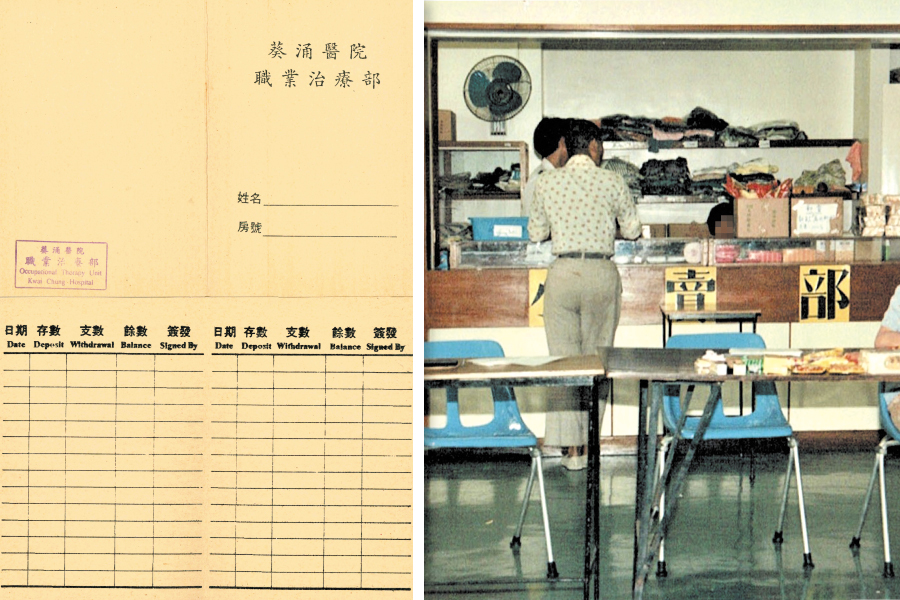 Starting from the 80s, the Occupational Therapy Department has implemented a token economy system in training workshops and wards to encourage patients’ active participation in occupational rehabilitation training, and to improve their work performance with application of Behavioral Modification technique. Each patient was rewarded with token-points according to their performance in training activities, including punctuality, concentration, tolerance, quality of work and social skills, etc. and would be appreciated by occupational therapists during the weekly community meeting. Token-points were recorded in a ‘bank book’. Snacks and daily consumable necessities such as toothpaste, toilet rolls, towels, slippers, etc. could be redeemed with the token-points in the tuck shop. In the early 90s, the token economy system was optimised from tangible rewards to monetary incentives which was closer to daily life.
‘Hawkers’ selling snacks in hospital?
KCH’s security facilities were not in high standard decades ago, people grasped the business opportunities and sold snacks to patients and their families inside the hospital. An old lady would even cook chicken wings for sale every day. It came to an end after security gates were built. People could only use the main entrance.Drama group in KCH
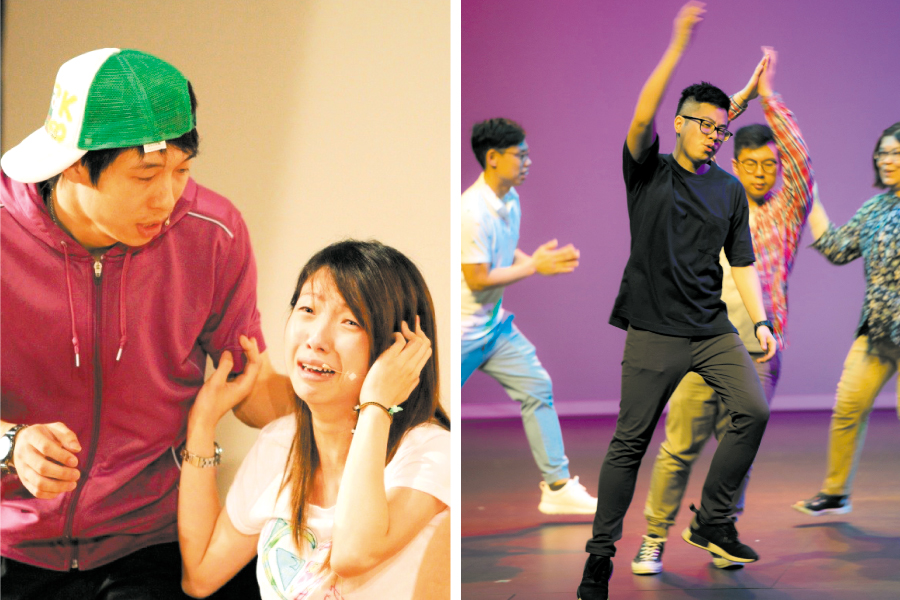 Established in 2001, the Kwai Chung Hospital Drama Group brings the staff, patients’ families and members of the community together to disseminate messages of anti-discrimination and mental health education. Most of the members have never received any trainings in drama or performance. All productions are collective creativity coming from daily life.
Since its establishment, the Drama Group has won numerous awards in drama competitions and was awarded the Hospital Authority and KCH Outstanding Team Award respectively in 2007.
Labyrinth
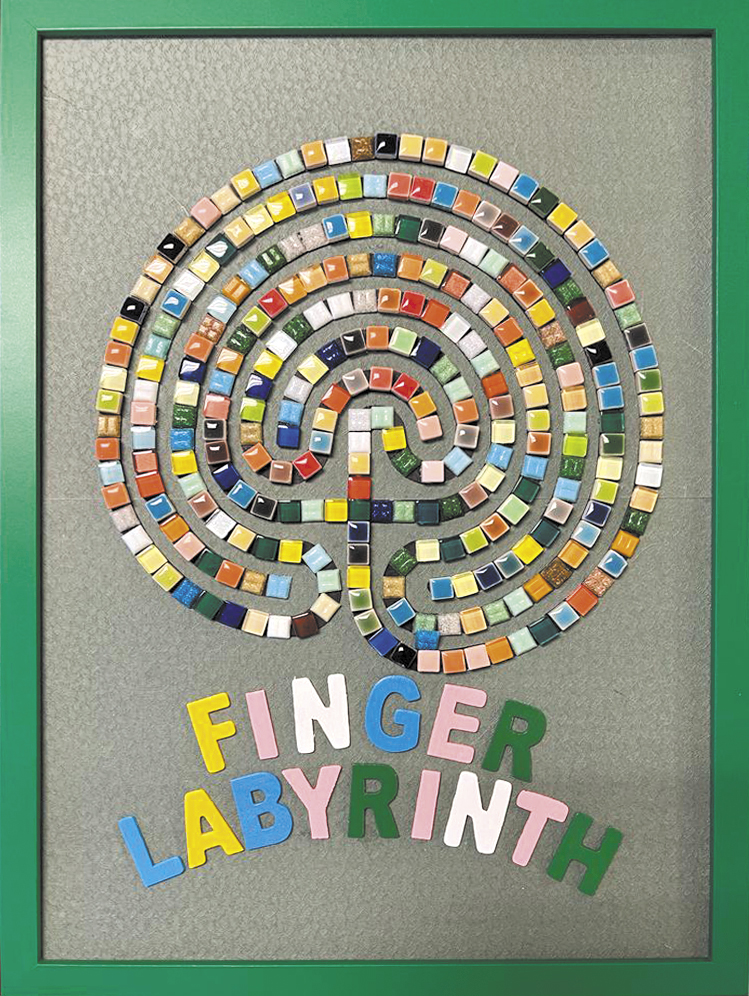
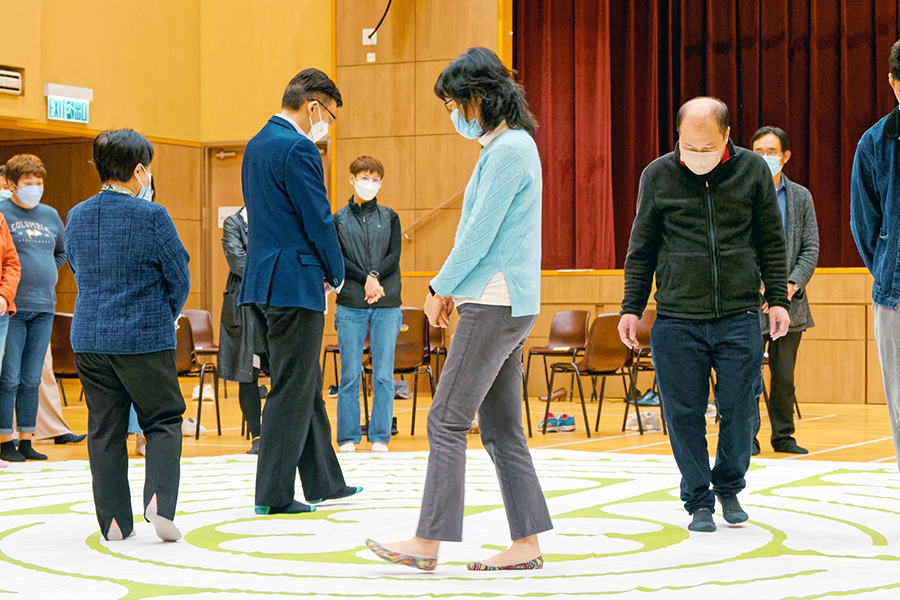 KCH has organised a ‘walking a labyrinth’ activity at the community hall and an outdoor experience with persons-in-recovery and their carers at Tao Fong Shan in Shatin, cultivating concentration and help reducing stress and emotional problems such as depression and anxiety. Labyrinth looks like a maze, but in fact there is a clear path towards the centre, where the entrance is also the exit. Those who enter the labyrinth just need to follow the only path, and will gradually reach the centre, and then turn back from the center point to the exit.
Upon completion of the redevelopment of KCH, there will be a labyrinth in the rehabilitation garden at the ground floor. A labyrinth can be in outdoor or indoor. Patients can use paper or wooden labyrinths to walk around with their fingers, and use different materials to decorate the labyrinths and create their own one.