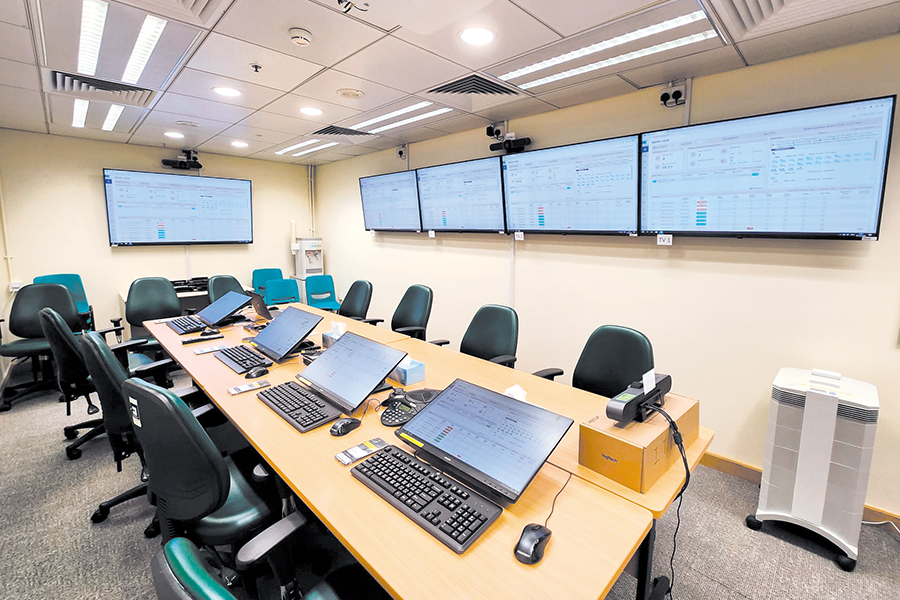
HAEOC coordinates resources mobilisation in response to major incidents
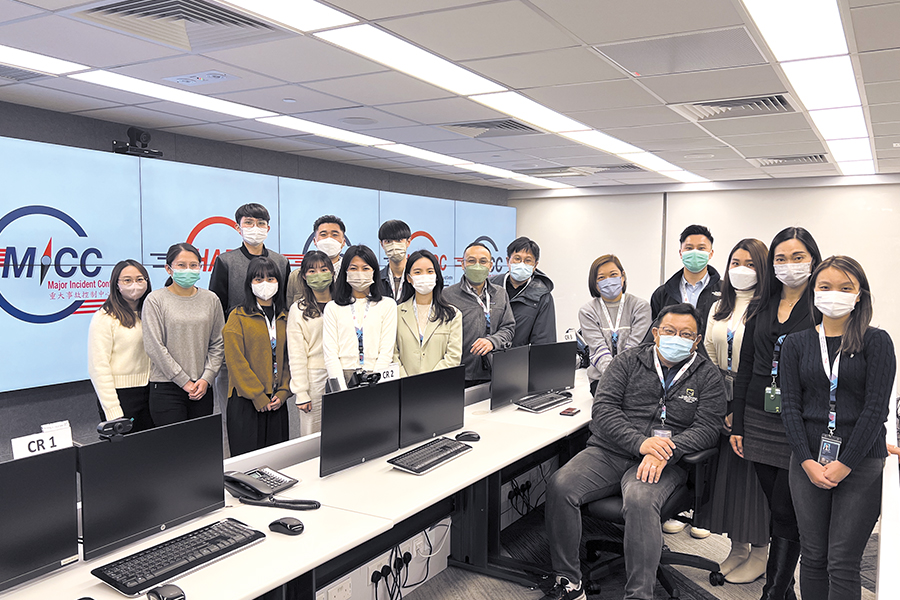
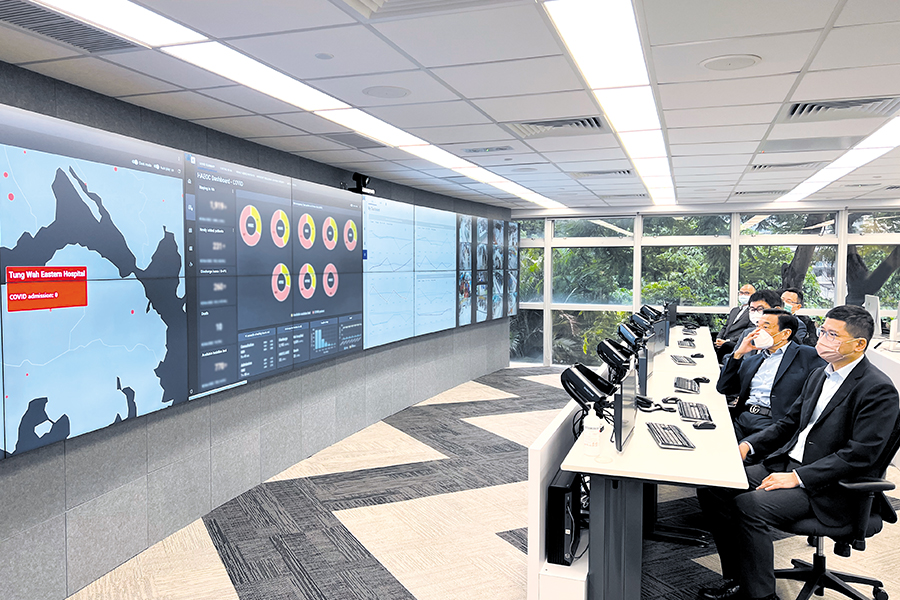 Hospital Authority Emergency Operation Command (HAEOC) has been commenced in June last year. It will be activated when there is major incident, with cluster senior executives and Head Office subject officers to take charge. HAEOC facilitates mobilising cluster resources like hospital beds and manpower more effectively and directly by monitoring real-time data and catching up with strategic decision, allowing patients or casualties to transfer to appropriate hospital or relevant facilities. HAEOC also provides an effective communication channel with government bodies such as the Department of Health and the Hong Kong Fire Services Department, enhancing HA’s response to major incidents.
 Andy Kung, HA Senior Manager (Infection, Emergency & Contingency) explains, “by reference to the command centre of clusters together with the help of Information Technology and Health Informatics Division, the HAEOC automatically monitors data on bed occupancy rates and the number of patients in a serious condition to understand better about the situation in different hospitals. Besides, Head Office could see the real-time situation of accident and emergency departments via the CCTV feed. Whenever patient admissions cause a heavy burden on a particular hospital, the HAEOC can help transfer patients to other hospitals. HAEOC allows coordination across clusters to form a single entity model for early alert and mobilisation. In the meantime, it paves the way for senior executives to make an operational decision.”
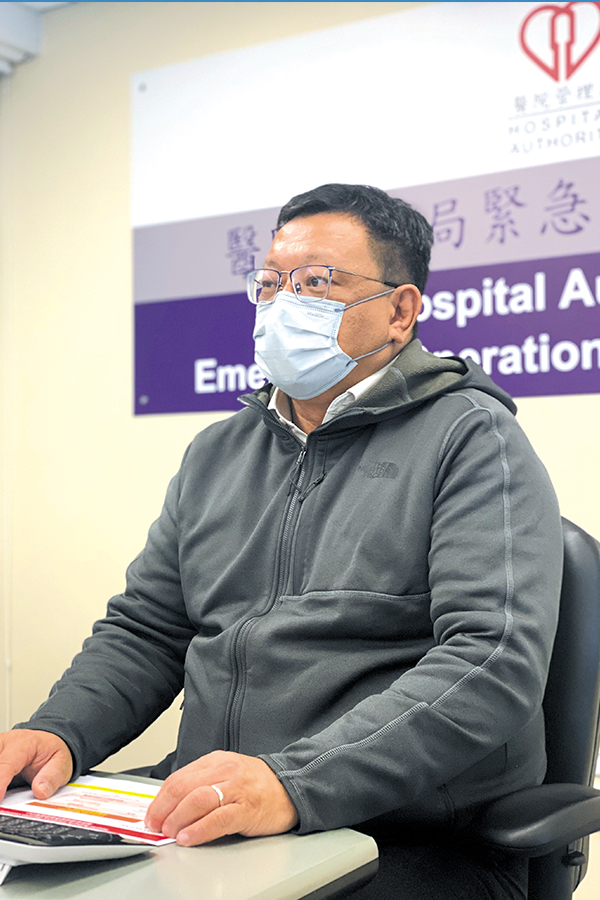 Andy adds that the HAEOC performs the function of decision-making, command, mobilisation as well as execution. Applying a rule of the four Cs – command, control, communication, and coordination – shortens the turnaround time of hospital beds for patients requiring admission or in critical or serious conditions.
Having a wide array of data from various platforms allows the HAEOC to manage resources flexibly, such as reports on flooding, fallen trees and road closures, allowing it to plan faster routes for patients to reach or triage to the hospital.
“Manpower deployment is extremely important in the face of a pandemic or any other public health emergency. All hospitals now have a real-name roster which makes manpower deployment more accurate and effective,” Andy says.
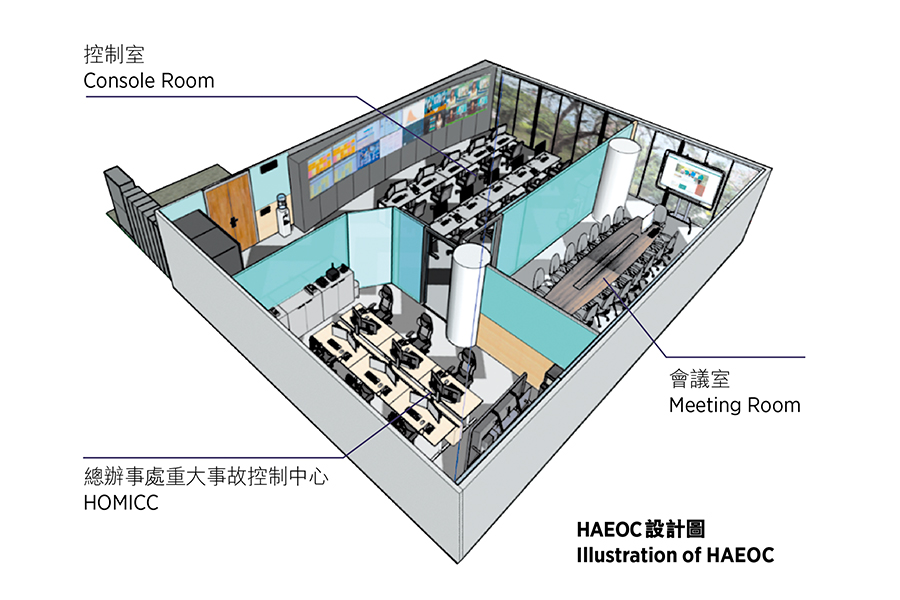 Andy says the team has drawn on experience in hospitals in setting up the HAEOC. To ensure a smooth operation in hospitals, the HA is setting up command centres in each cluster to improve clinical management, bed capacity management, and resources management.