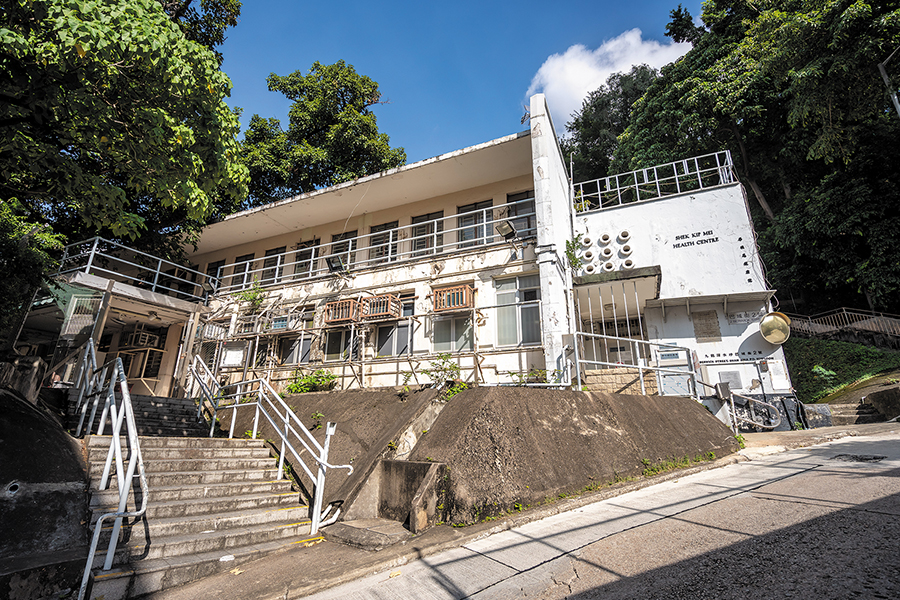
Much-loved neighbourhood clinic to be temporarily relocated for redevelopment after six decades of caring
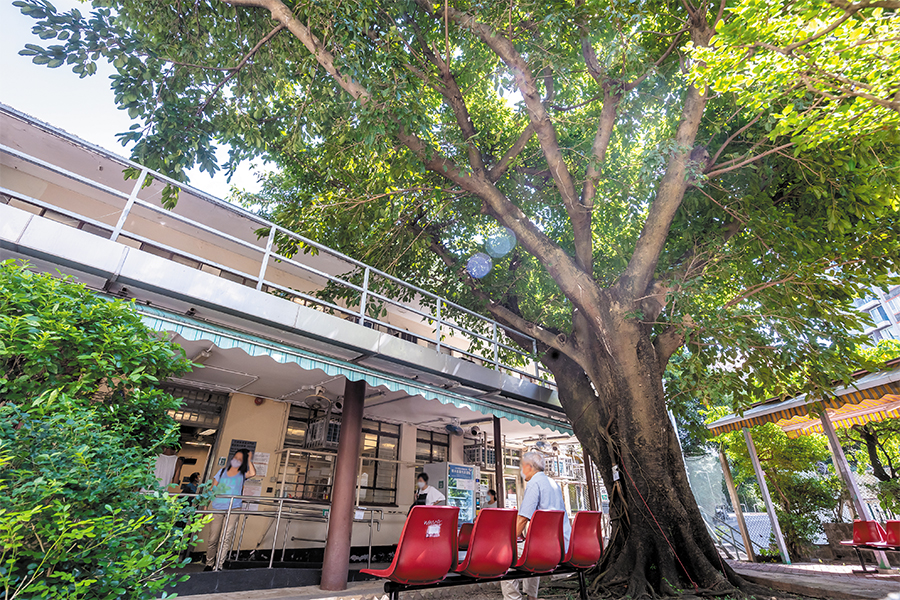 The general out-patient clinics (GOPCs) – once known as ‘neighbourhood clinics’ that brought healthcare to the masses – played a key role in Hong Kong’s primary healthcare. Shek Kip Mei GOPC (formerly known as Shek Kip Mei Health Centre) opened in 1957 and was one of the GOPCs of first generation in the post-war era. Having provided service for more than a half century, the clinic will be temporarily relocated early next year for in-situ redevelopment. Yet its close bond with the community will never change.
Shek Kip Mei Health Centre was opened in November 1957 as one of the GOPCs of first generation in Hong Kong, providing care for around 50,000 people resettled in the area following the Shek Kip Mei fire in 1953. Tso Oi-man, affectionately known as Uncle Man, joined the clinic as Workman II in 1987 and served there until his retirement in 2015. He recalls pushing patients up the ramp outside the clinic every day. “The patients were very committed to this clinic,” he says. “Some of them had never been to any other clinics, and they would even come in their wheelchairs.”
On one occasion, a part from a patient’s wheelchair fell into a drain as an elderly couple was coming to the clinic. “I spent half an hour finding the part and working out how to put it back on,” he says. “The couple were very grateful and came back to thank me.”
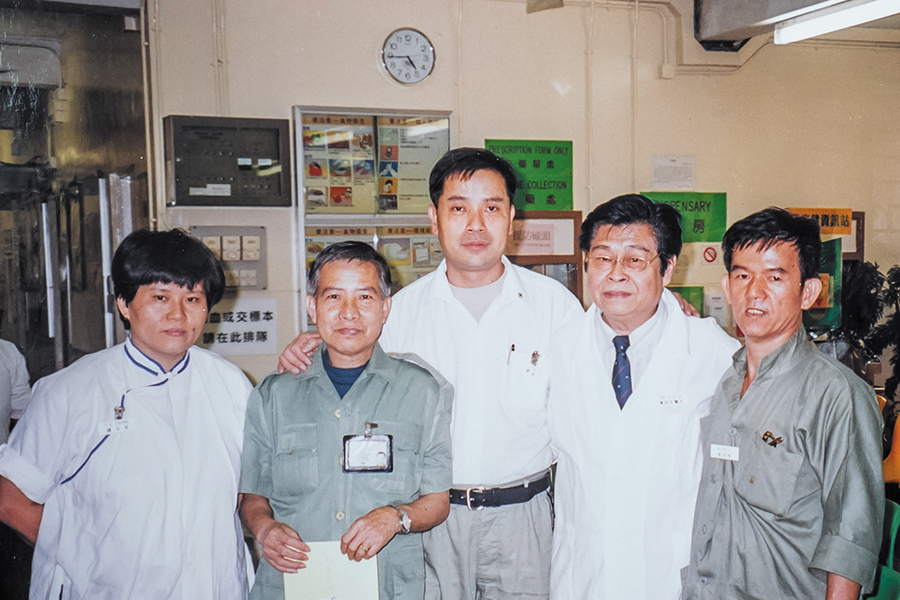
‘They are your patients even when they have not yet entered the clinic’
Shek Kip Mei Health Centre was one of the Designated Medical Centres set up by the Department of Health (DH) during the SARS outbreak in 2003, providing daily checkups and examinations for close contact persons. Some patients with symptoms like breathing difficulties walked long distances for check-ups, and Uncle Man recalls, a lady in her 20s who was too exhausted to complete her journey to the clinic. “There were no masks and no personal protective equipment at that time and no one offered this young lady a helping hand,” he says. “I didn’t give it much thought and immediately helped her to the clinic.” For Uncle Man, it was an instinctive reaction. “They are your patients even when they have not yet entered the clinic,” he explains. “Even if you see someone in need outside the clinic, you should offer a helping hand.”In 2003, the Hospital Authority (HA) took over all the GOPCs of the DH. Health Care Assistant Eva Mok joined the clinic in the same year and was involved in the handover and witnessed the enhancement of GOPC booking service, and the ending of the days when patients would queue from dawn for appointments and doctors would write medical records by hand. “At first, patients struggled to adjust to making appointments by phone, so we set up a telephone demonstration at the clinic and distributed leaflets to show patients how to make appointments,” she says. “Now that HA is developing smart healthcare, we are teaching them how to use the ‘HA Go’ App.”
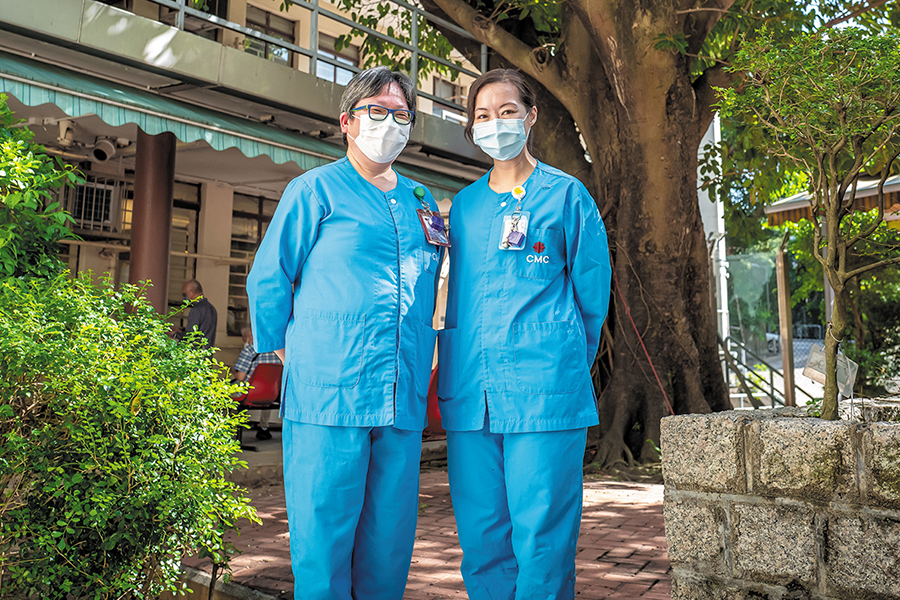
Patients care about the lives of staff
Registered Nurse Shirley Ku says the clinic has always had a close relationship with the community it serves as well as the people’s livelihood. During the melamine-tainted milk powder incident in 2008, she recalls parents lined up to bring infants to the clinic for assessment and the clinic was full of the sound of crying babies. “We arranged additional sessions at weekends to assess the children, check milk powder and snacks one by one and explain the situation to the worried parents,” she says.The experiences and the care provided by the clinic built up a bond of trust between patients and clinical staff, and both Eva and Shirley cherish their neighborhood. “Many of our patients come back for regular follow-up, not only telling us about their condition but also asking us about our lives as well,” they share.
“Even though we had only done simple things for them, they were truly grateful to us and, because of this trust, we are even more committed to our work.”