Expanding the pool for increased chance of matching
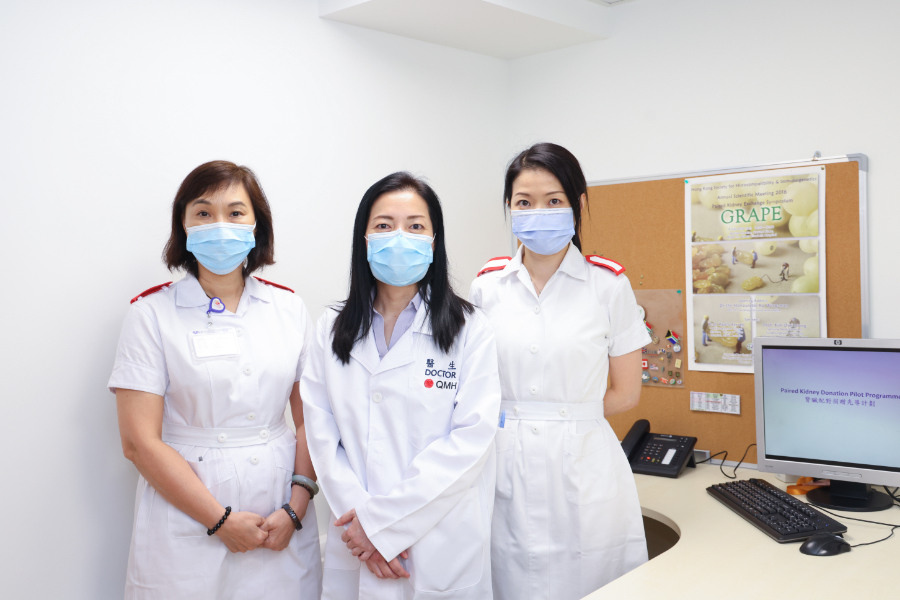
The first successful paired kidney operations have laid a milestone for organ transplantation in Hong Kong, thanks to a dedicated team who overcoming hurdles from preparation to the legislative amendments and renal transplantation. Dr Janette Kwok, Co-Chairperson of Paired Kidney Donation Working Group of Hospital Authority (HA), first introduced the paired kidney donation (PKD) programme to HA, describing the whole journey as ‘crossing the river by touching the stones’.
Dr Kwok first heard with great interest of the PKD programme from an expert at a conference held in Perth in 2009, and has since paid close attention to global developments in this area. In 2014, in response to the significant rise in number of patients waiting for deceased allografts, Dr Kwok devised and proposed launching a PKD programme in Hong Kong with the support of the HA Central Renal Committee (CRC). The PKD Working Group which formulated the programme was set up in 2015, consisting of specialists in nephrology, urology, histocompatibility and immunogenetics and clinical psychology. Prof Philip Li and Dr Chau Ka-foon were also the Co-Chairperson of PKD Working Group.
“We learned from developments in Europe and the US that legislative amendments are essential before PKD programme can be implemented because of the issue of inducement,” Dr Kwok says. “We therefore started lobbying and discussing the amendment with internal departments and government counterparts.” The Human Organ Transplant (Amendment) Bill was approved by the Legislative Council in 2018, allowing for paired/pooled organ donation arrangements in Hong Kong. The PKD Pilot Programme of the HA was launched at the end of 2018.
Dr Kwok explains, “the vision of the programme is to turn incompatibility into compatibility. The matching pool is a collection of pairs with previously incompatible live donation. The match run is currently done by a computer program.” She elaborates that a match is succeeded when both the blood group and Human Leucocyte Antigen (HLA) of the two donor-recipient pairs are compatible. The number of pairs in the pool is the most crucial factor in determining the success of matching. “We visited the Netherlands and the UK, participating in a PKD match run with 300 families in the UK. I was very impressed with the results of more than 80 matched pairs,” she recalls.
In Hong Kong, the PKD Pilot Programme has recruited nearly 30 pairs of participants. “We are still in early development stage,” Dr Kwok says. “The smaller the pool, the more difficult it is to find a match, so we are very encouraged by the success of two matched pairs. Looking to the future, we need to get more referrals from eligible cases to increase the size of the matching pool.” Dr Kwok describes the programme as the ‘GRAPE Project’ - Getting Renal Alternative through Paired Exchange.
Dr Kwok first heard with great interest of the PKD programme from an expert at a conference held in Perth in 2009, and has since paid close attention to global developments in this area. In 2014, in response to the significant rise in number of patients waiting for deceased allografts, Dr Kwok devised and proposed launching a PKD programme in Hong Kong with the support of the HA Central Renal Committee (CRC). The PKD Working Group which formulated the programme was set up in 2015, consisting of specialists in nephrology, urology, histocompatibility and immunogenetics and clinical psychology. Prof Philip Li and Dr Chau Ka-foon were also the Co-Chairperson of PKD Working Group.
“We learned from developments in Europe and the US that legislative amendments are essential before PKD programme can be implemented because of the issue of inducement,” Dr Kwok says. “We therefore started lobbying and discussing the amendment with internal departments and government counterparts.” The Human Organ Transplant (Amendment) Bill was approved by the Legislative Council in 2018, allowing for paired/pooled organ donation arrangements in Hong Kong. The PKD Pilot Programme of the HA was launched at the end of 2018.
Dr Kwok explains, “the vision of the programme is to turn incompatibility into compatibility. The matching pool is a collection of pairs with previously incompatible live donation. The match run is currently done by a computer program.” She elaborates that a match is succeeded when both the blood group and Human Leucocyte Antigen (HLA) of the two donor-recipient pairs are compatible. The number of pairs in the pool is the most crucial factor in determining the success of matching. “We visited the Netherlands and the UK, participating in a PKD match run with 300 families in the UK. I was very impressed with the results of more than 80 matched pairs,” she recalls.
In Hong Kong, the PKD Pilot Programme has recruited nearly 30 pairs of participants. “We are still in early development stage,” Dr Kwok says. “The smaller the pool, the more difficult it is to find a match, so we are very encouraged by the success of two matched pairs. Looking to the future, we need to get more referrals from eligible cases to increase the size of the matching pool.” Dr Kwok describes the programme as the ‘GRAPE Project’ - Getting Renal Alternative through Paired Exchange.
The four stages of PKD match run
1.Before matching
Referral and assessment
Potential pairs are referred from hospitals to the QMH Laboratory Transplantation Coordination Centre. The staff meet with the pairs individually for initial assessment to ensure they fully understand the details of the programme and are willing to join without pressure. Blood will be taken for HLA typing and HLA antibody tests and storage of cells. The results are entered into the computer system with index reference numbers for match run every three months.
2. Week 0-1
Match run
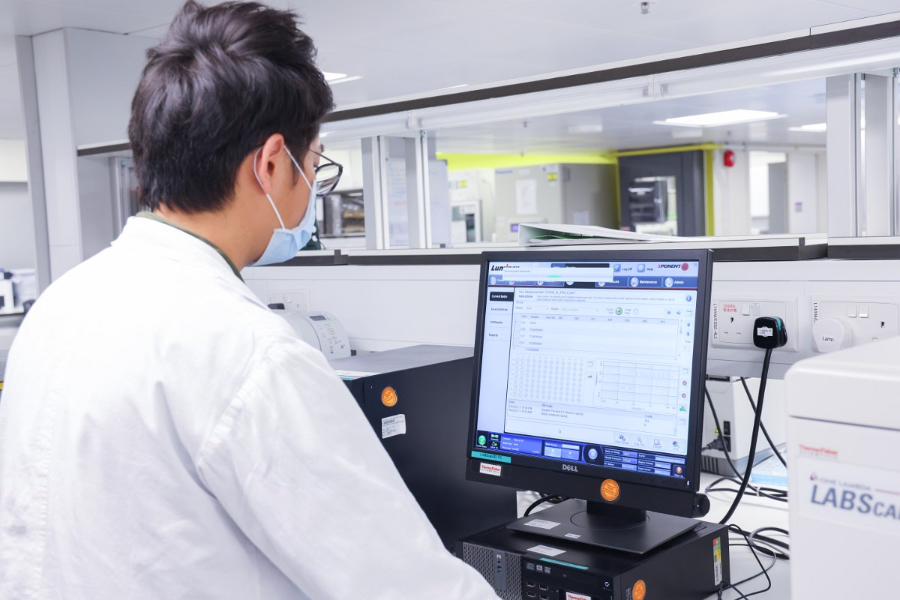
If matched pairs are successfully identified, the CRC will hold case conference, and Transplantation & Immunogenetics team will do cross-match for the two pairs to confirm the results. The relevant teams are also involved in the preparation of the PKD transplant.
3. Week 2-7
Investigations and medical and psychological consultations
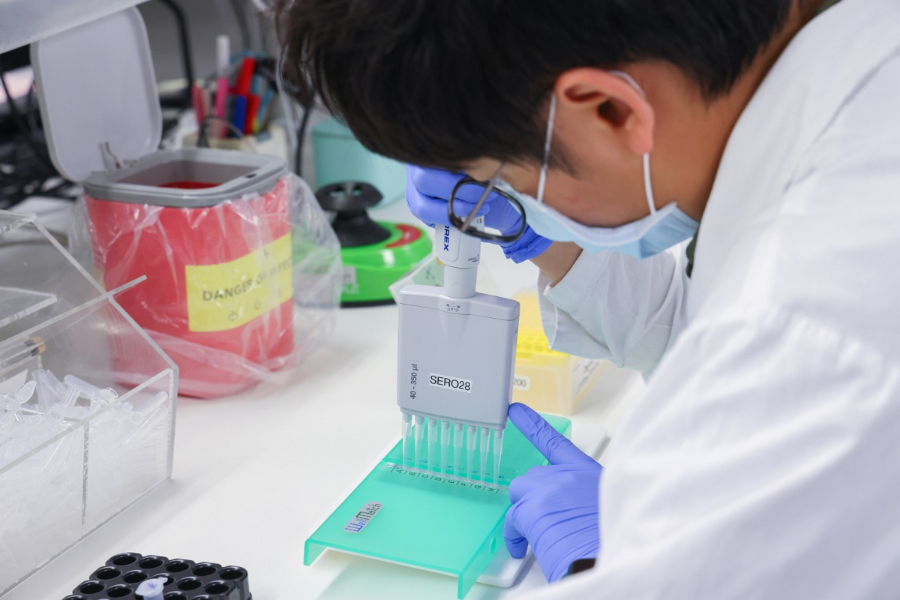
Specific investigations include CT angiography of kidneys and renal function tests will be done. The pairs will have medical and psychological assessments. After confirmation of all test reports, the patients are delisted from the deceased allocation waitlist, and the application is submitted to the Human Organ Transplant Board for approval.
4. Week 8-12
Readiness for transplantation
The two pairs undergo final cross-match to confirm safety of donation and transplant. The surgical teams arrange simultaneous PKD transplantation for the two pairs. Meanwhile, the next round of match run is ready to go.