Memoirs of Our Lady of Maryknoll Hospital
60s
Neighbouring with hogs
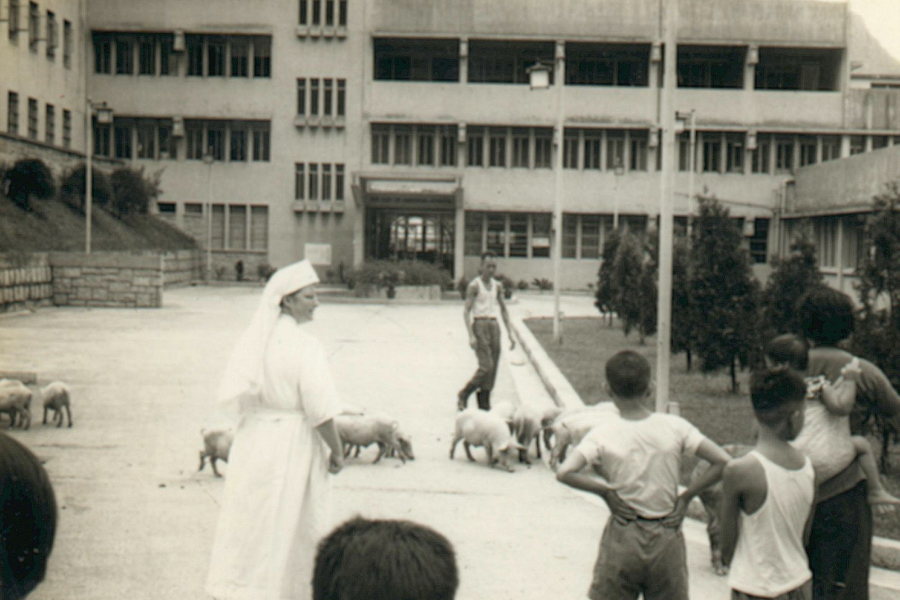
Wong Tai Sin was one of the poorest and most densely populated immigrant communities in the past. Resettlement blocks and squatter huts could be found everywhere in the district. Inside the squatter huts in the neighbourhood of OLMH, residents would even raise hogs and grow vegetables. It was not a surprise for staff to see the animals wandering around the hospital.
Visit of Typhoon Wanda in opening
The opening ceremony of the hospital’s out-patient department was originally scheduled on 1 September, 1962, yet Typhoon No. 10 Wanda was hoisted. The roofs of squatter huts were blown off and even flew past the windows of the hospital. The nurses were thoroughly wet and struggled up the hill to report duty. At the same night, 150 homeless residents were received.
70s
Kitchen in the past
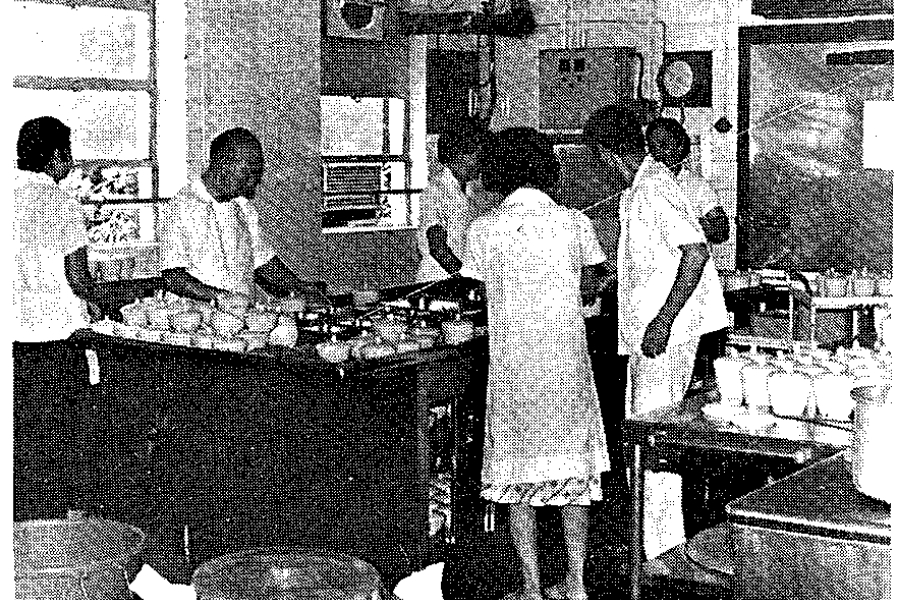
In the past, the hospital’s kitchen was responsible for providing three meals and late-night supper to patients every day. In the beginning, the meals were delivered to the wards before being further served and distributed by nurses. It was not until 1978, the meals were packed according to individual quantity, and then put into the warming cabinets and delivered to the wards in order to reduce the workload of nurses. Afterwards, the kitchen closed down due to the service transformation. Centralised meal delivery by cluster was adopted.
80s
Pioneering new services
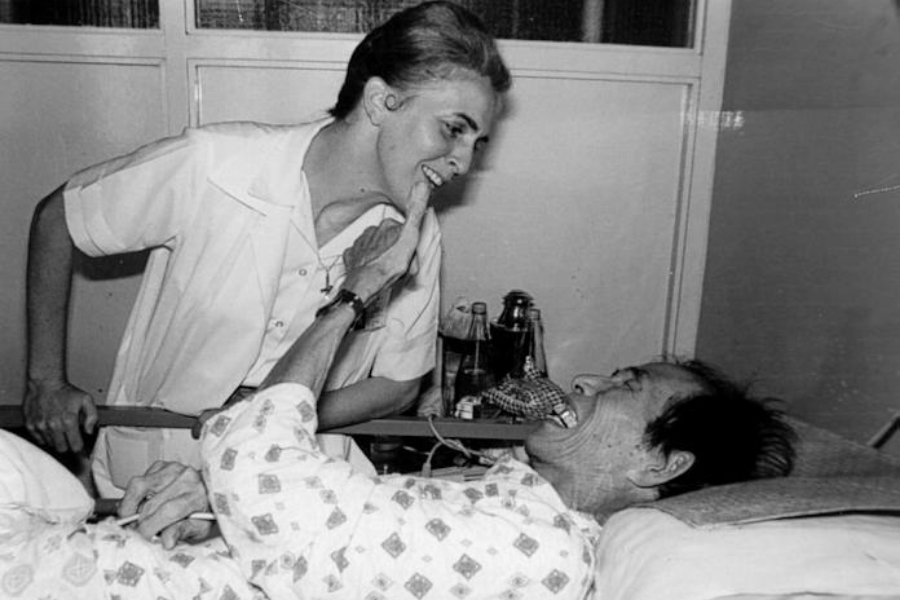
The services at OLMH became more comprehensive in the 1970s and 1980s. In 1970, OLMH was the first hospital to initiate Community Nurse Programme providing follow-up services for discharged patients. In 1977, OLMH set up the Pastoral Ministry Programme offering psychological and spiritual care. OLMH was the first hospital to provide this service. Later in 1982, the Palliative Care Team was established, promoting the development of palliative care in Hong Kong.
90s
The first male nurse
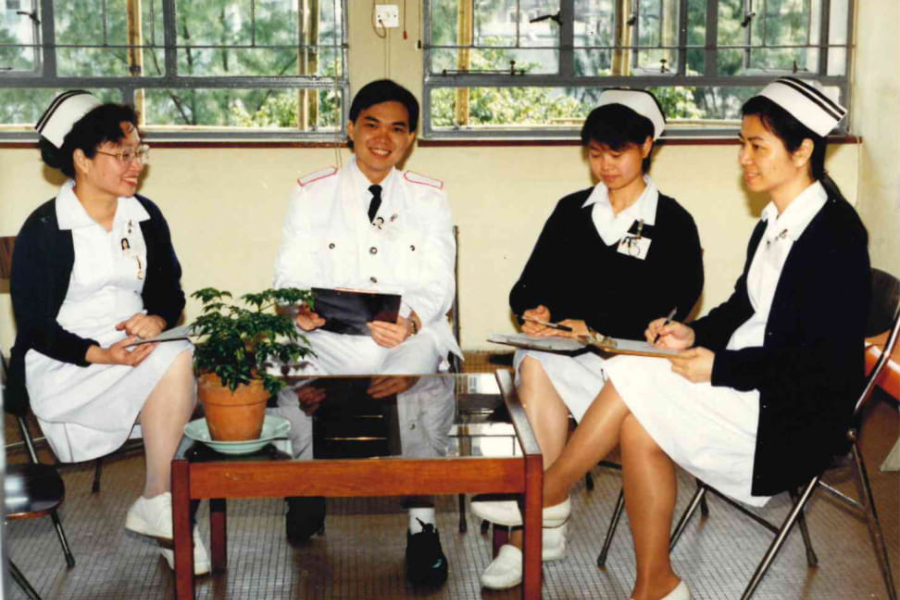
Eric Wong, the Senior Nursing Officer, joined OLMH in 1995, was actually the first male nurse in the hospital hired by the HA. He was so surprised on his first day of reporting duty. There was no male changing room nor male staff toilet, and even no male nurse uniform. Under this condition, he had to wear his old uniform from the previous hospital not until 1996. Three to four years later, there were male nurses gradually joining OLMH.
Millennium
Y2K bug nightmare
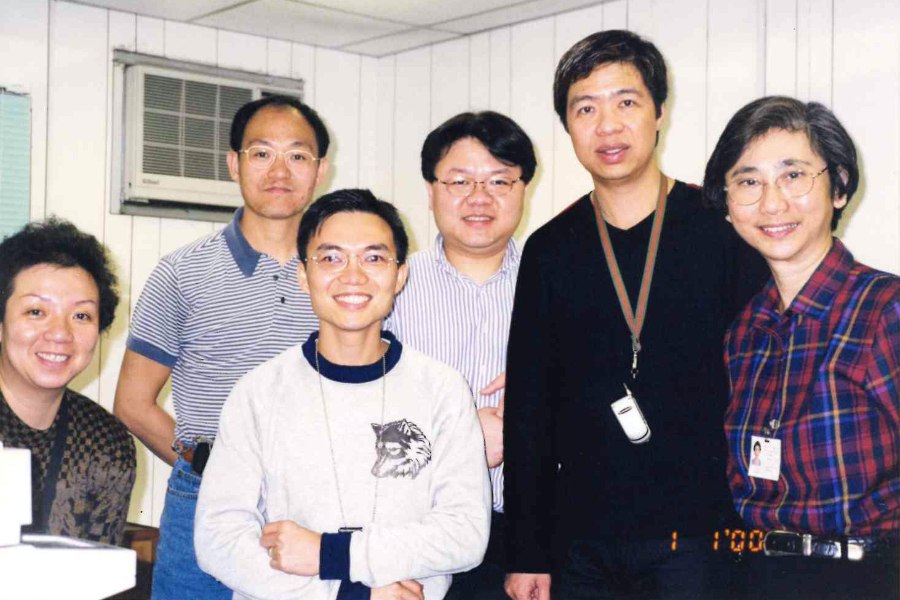
Eric Wong (the front row) recalls on the new year’s eve of 2000, rumours about Y2K bug attacking all networks in Hong Kong including various hospital facilities were spread all over the community. As a result, from senior management to frontline of numerous departments in OLMH stayed overnight at the hospital. Eric was one of them to report the latest development once per hour. It was however proven to be a false alarm.
Future
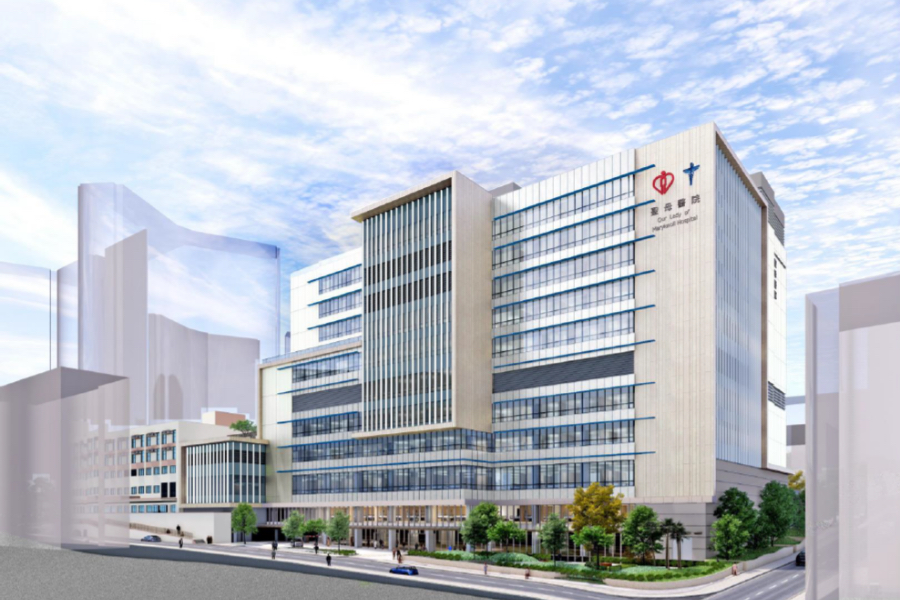
OLMH will undergo an in-situ redevelopment of the Main Block next year. The construction work is expected to be completed in 2026 at the earliest. By then, the number of beds will be increased and the associate facilities will be upgraded to serve the needs of residents in Wong Tai Sin with a brand-new look.