Serving the impoverished in the name of love - Our Lady of Maryknoll Hospital
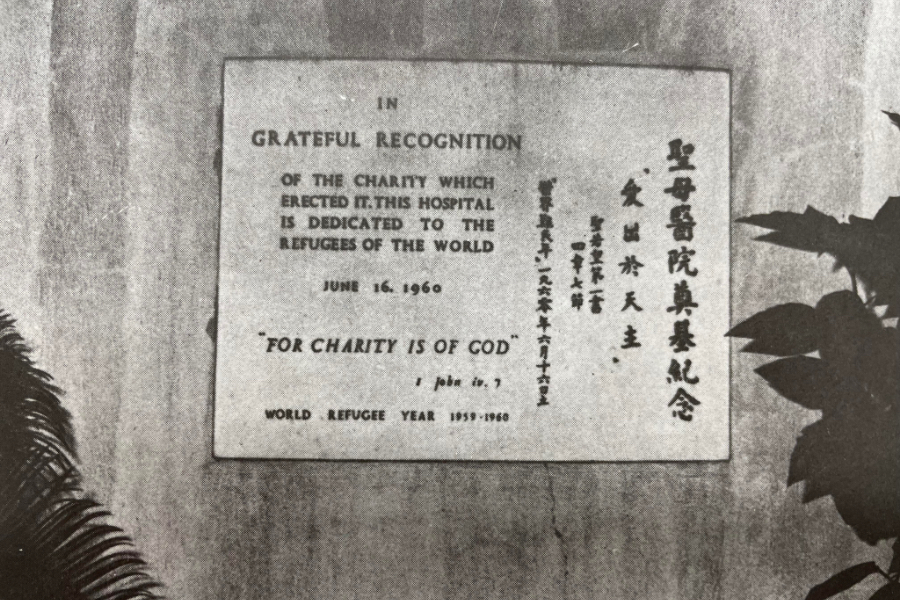
The quote ‘For charity is of God’ is engraved on the cornerstone of
Our Lady of Maryknoll Hospital (OLMH). The hospital, located on the hillside of Shatin
Pass Road, has been serving the residents of Wong Tai Sin district for 60 years. From a
hospital taking care of refugees to a general hospital with a full range of services,
the intention of serving the impoverished has never changed along its journey. Dr
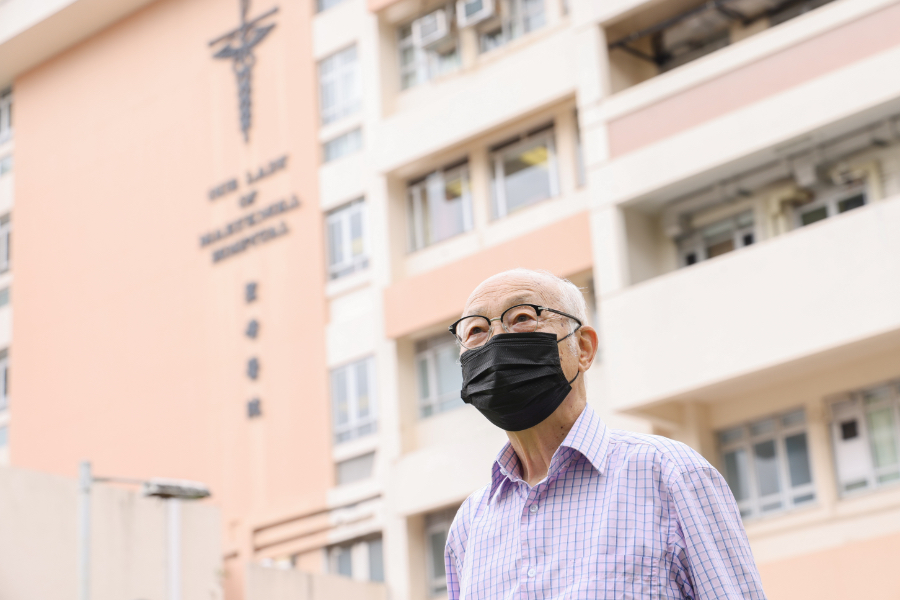
Conrad Lam, the first Chinese Medical Superintendent of OLMH, has
contributed to the hospital for most of his life. He shares his bittersweet memories of
managing the hospital in the early years with HASLink.
In the 1950s, there was an influx of refugees from mainland China to
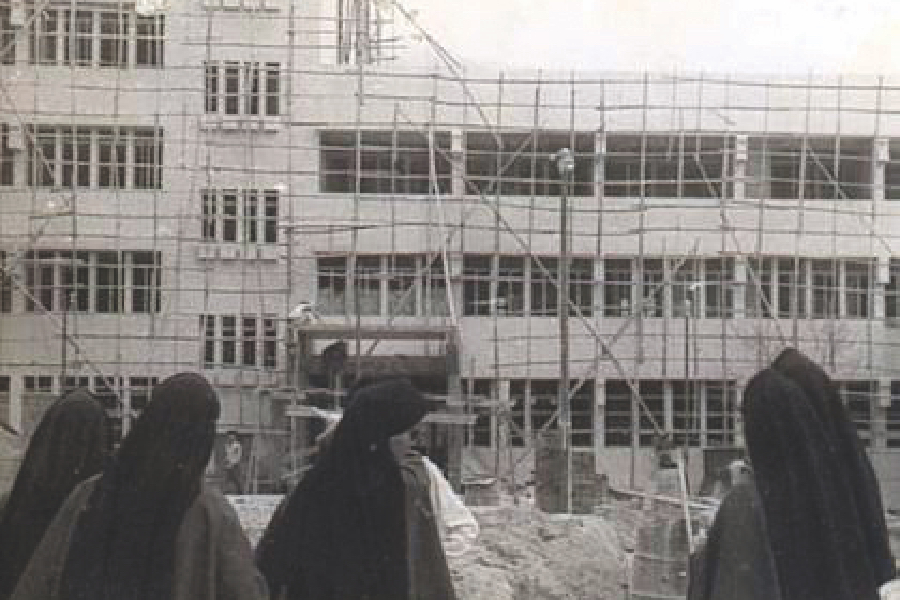
Hong Kong. The Maryknoll Sisters planned to set up a charitable hospital near the
refugee community and finally decided to build it in Wong Tai Sin, a densely populated
district. OLMH was officially opened in 1961. With limited manpower and resources, apart
from healthcare services, the sisters also took up the duties of clean up and
sanitation. Meanwhile, they had to provide daily essentials for the families in need,
and spare some time to learn Cantonese.
Free medical consultations by volunteer doctors
Dr Conrad Lam was a fresh graduate when he joined OLMH in 1963,
whilst he experienced the most daunting time of the hospital. He recalls there were only
two doctors except himself by that time, including a sister working as surgeon. “We
couldn’t afford to hire more doctors and even the neighbourhood had raised money for us.
I sought help from my fellow schoolmates and friends from church to provide free medical
consultations one to two sessions a week. With this arrangement we managed to provide
specialties in obstetrics and gynecology, tuberculosis and chest, dermatology and
surgery,” says Dr Lam.
He laughs off the unique system of OLMH was put into force by the circumstances. He cited the example of giving ‘flexibility’ to doctors in order to retain talent by the time that a newly built hospital in Kowloon had led to a high turnover rate in OLMH. “Four doctors out of six resigned. It was impossible to continue to operate in long run. I proposed allowing our doctors to practise in other clinics after work in order to attract more doctors to join,” says Dr Lam. He was appointed as Medical Superintendent in 1972 after the former Hospital Administrator had left Hong Kong. He is proud of the development of OLMH, saying that “we were the first local general hospital cooperated with the government and church, providing medical services for more than 500,000 residents in Wong Tai Sin. We had a full range of medical, surgical, gynecological and paediatric services, as well as independent operation theatre, laboratory and kitchen.”
He laughs off the unique system of OLMH was put into force by the circumstances. He cited the example of giving ‘flexibility’ to doctors in order to retain talent by the time that a newly built hospital in Kowloon had led to a high turnover rate in OLMH. “Four doctors out of six resigned. It was impossible to continue to operate in long run. I proposed allowing our doctors to practise in other clinics after work in order to attract more doctors to join,” says Dr Lam. He was appointed as Medical Superintendent in 1972 after the former Hospital Administrator had left Hong Kong. He is proud of the development of OLMH, saying that “we were the first local general hospital cooperated with the government and church, providing medical services for more than 500,000 residents in Wong Tai Sin. We had a full range of medical, surgical, gynecological and paediatric services, as well as independent operation theatre, laboratory and kitchen.”
Catering the community development with service transformation
After operating by subvented organisation for 30 years, OLMH joined
the Hospital Authority (HA) in 1991. Since then, the hospital’s environment had been
greatly improved – with a newly constructed out-patient block and same remuneration and
benefits as other public hospitals. Dr Lam admits that joining the HA was a turning
point for OLMH, allowing it to centralise the resources on service improvement. In
response to aging population of the community and ‘hospital clusterisation’, the
hospital had to make a choice. Hence, the obstetrics service was suspended in the 1990s
and OLMH then focused on medical and geriatric services.
Time flies and it is already 60 years. The redevelopment of OLMH will kick off next year. A service network consisting of the new acute hospital in Kai Tak will be formed, under the collaboration with other hospitals in Kowloon Central Cluster. Dr Lam is in his eighties, says developing local hospital is a shared vision. He wishes OLMH could cope with the ever-changing society and continue to provide services with due emphasis on both quality and quantity.
Time flies and it is already 60 years. The redevelopment of OLMH will kick off next year. A service network consisting of the new acute hospital in Kai Tak will be formed, under the collaboration with other hospitals in Kowloon Central Cluster. Dr Lam is in his eighties, says developing local hospital is a shared vision. He wishes OLMH could cope with the ever-changing society and continue to provide services with due emphasis on both quality and quantity.